


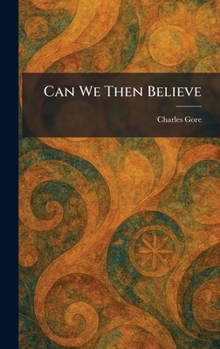
Can We Then Believe

"Can We Then Believe" is a profound exploration of Christian faith in the face of modern intellectual challenges. Written by the influential theologian Charles Gore, this work serves as a comprehensive defense of the reasonableness of belief during an era defined by rapid scientific advancement and rigorous historical criticism. Gore addresses the tensions between traditional dogma and the emerging scientific worldview, seeking to provide a synthesis that honors both spiritual conviction and intellectual integrity.
The book examines the foundational principles of Christianity, dealing with topics such as the nature of revelation, the historical person of Jesus Christ, and the evolving relationship between philosophy and theology. Gore argues that a robust faith is not only compatible with modern knowledge but is essential for a complete understanding of the human experience. Through lucid prose and rigorous argument, "Can We Then Believe" offers a pathway for those seeking to reconcile their religious heritage with the demands of the modern mind. This work remains a significant contribution to Anglican theology and a testament to the enduring dialogue between faith and reason.
This work has been selected by scholars as being culturally important, and is part of the knowledge base of civilization as we know it. This work was reproduced from the original artifact, and remains as true to the original work as possible. Therefore, you may see the original copyright references, library stamps (as most of these works have been housed in our most important libraries around the world), and other notations in the work.
This work is in the public domain in the United States of America, and possibly other nations. Within the United States, you may freely copy and distribute this work, as no entity (individual or corporate) has a copyright on the body of the work.
As a reproduction of a historical artifact, this work may contain missing or blurred pages, poor pictures, errant marks, etc. Scholars believe, and we concur, that this work is important enough to be preserved, reproduced, and made generally available to the public. We appreciate your support of the preservation process, and thank you for being an important part of keeping this knowledge alive and relevant.
Customer Reviews
ThriftBooks ® and the ThriftBooks ® logo are registered trademarks of Thrift Books Global, LLC
