


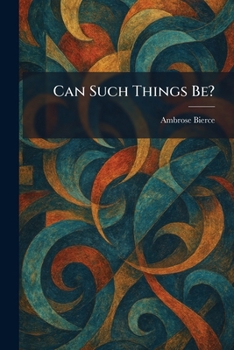
Can Such Things Be?


Select Format
Select Condition 
Book Overview
"Can Such Things Be?" is a seminal collection of supernatural and horror fiction from the master of the macabre, Ambrose Bierce. Comprising dozens of chilling short stories, this work explores the thin veil between the natural world and the inexplicable phenomena that lie just beyond human understanding. Bierce's narratives often delve into the psychological toll of fear, the grim realities of death, and the lingering presence of the dead.
Known for his sharp wit and cynical outlook, Bierce populates these tales with soldiers, travelers, and ordinary individuals who encounter the uncanny in its most unsettling forms. From haunted houses and mysterious disappearances to spectral visions on the battlefield, the stories in "Can Such Things Be?" are characterized by their tight pacing and often shocking conclusions. This collection stands as a cornerstone of American Gothic literature, showcasing Bierce's unique ability to blend realism with the fantastic.
Readers will find a diverse array of themes, including the consequences of unresolved guilt and the cold indifference of the universe. As a significant contribution to the development of the modern horror genre, this work continues to influence writers and captivate those drawn to the darker side of the human experience.
This work has been selected by scholars as being culturally important, and is part of the knowledge base of civilization as we know it. This work was reproduced from the original artifact, and remains as true to the original work as possible. Therefore, you may see the original copyright references, library stamps (as most of these works have been housed in our most important libraries around the world), and other notations in the work.
This work is in the public domain in the United States of America, and possibly other nations. Within the United States, you may freely copy and distribute this work, as no entity (individual or corporate) has a copyright on the body of the work.
As a reproduction of a historical artifact, this work may contain missing or blurred pages, poor pictures, errant marks, etc. Scholars believe, and we concur, that this work is important enough to be preserved, reproduced, and made generally available to the public. We appreciate your support of the preservation process, and thank you for being an important part of keeping this knowledge alive and relevant.
Customer Reviews
ThriftBooks ® and the ThriftBooks ® logo are registered trademarks of Thrift Books Global, LLC
