


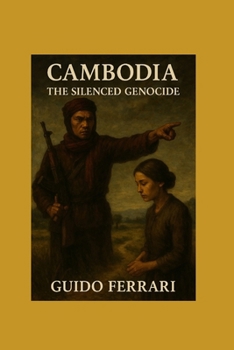
Cambodia: The Silenced Genocide

Between 1975 and 1979, Cambodia was engulfed in a horror that cost the lives of about two million people - a quarter of the population - under the Khmer Rouge regime led by Pol Pot. Yet while the Holocaust and the Stalinist gulags are well known, this genocide remains largely unknown to the Italian public. Cambodia: The Forgotten Nightmare brings this overshadowed tragedy back to light, exploring a unique genocide: perpetrated not by foreign invaders but by Cambodians themselves against their own people, led by intellectuals educated in European universities who turned utopian theories into killing machines.
Through a detailed timeline (1968-2025), thematic chapters, and biographical profiles of the main actors - from Pol Pot to Norodom Sihanouk, from Duch to Hun Sen - the book reconstructs the entire trajectory of the tragedy: the rise of the Khmer Rouge amid the chaos of the Cold War, the secret American bombings, the brutality of "Year Zero," and the long path toward a justice that came too late. Testimonies of survivors, archival documents, and analysis of the trials before the Extraordinary Chambers in the Courts of Cambodia (ECCC) - which concluded only in 2022 - provide a vivid and rigorous picture of how an agrarian utopia turned into systematic genocide.
The book is not only a historical narrative but also an urgent reflection on the importance of memory in preventing future atrocities. In an age of growing polarization and authoritarianism, the Cambodian experience offers crucial lessons on the dangers of intellectual radicalization, the responsibility of "bad teachers," and the cynicism of international realpolitik, which for decades placed geopolitical interests above basic justice.
Written in accessible yet rigorously scholarly language, the volume addresses both the general public and specialists, filling a gap in Italian historical memory and offering an essential tool for understanding one of the darkest chapters of the twentieth century. It is an invitation to remember, so that the Cambodian nightmare does not remain forgotten and its lessons may serve as a warning for the future
Related Subjects
History Political Science Politics & Social Sciences Social Science Social SciencesCustomer Reviews
ThriftBooks® and the ThriftBooks® logo are registered trademarks of Thrift Books Global, LLC
