


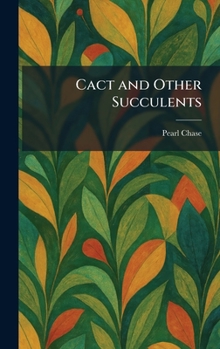
Cact and Other Succulents

"CACT and Other SUCCULENTS" serves as an essential guide for gardening enthusiasts and nature lovers interested in the diverse and resilient world of desert flora. This work provides detailed insights into the identification, care, and cultivation of various succulent species, highlighting their unique aesthetic and practical benefits in landscape design.
From the structural beauty of large cacti to the intricate patterns of smaller succulent varieties, the book offers practical advice on soil conditions, watering schedules, and the environmental needs of these hardy plants. Written with a passion for botanical preservation and garden aesthetics, the text reflects a deep appreciation for the natural world and the artistry of xeriscaping. Readers will discover the fascinating adaptations that allow these plants to thrive in arid climates and learn how to successfully integrate them into their own collections or gardens.
"CACT and Other SUCCULENTS" remains a valuable resource for anyone seeking to deepen their understanding of these captivating botanical specimens and their role in sustainable horticulture. Whether for indoor pots or outdoor arrangements, this guide is a testament to the enduring appeal of these remarkable plants and their ability to bring a touch of the desert to any environment.
This work has been selected by scholars as being culturally important, and is part of the knowledge base of civilization as we know it. This work was reproduced from the original artifact, and remains as true to the original work as possible. Therefore, you may see the original copyright references, library stamps (as most of these works have been housed in our most important libraries around the world), and other notations in the work.
This work is in the public domain in the United States of America, and possibly other nations. Within the United States, you may freely copy and distribute this work, as no entity (individual or corporate) has a copyright on the body of the work.
As a reproduction of a historical artifact, this work may contain missing or blurred pages, poor pictures, errant marks, etc. Scholars believe, and we concur, that this work is important enough to be preserved, reproduced, and made generally available to the public. We appreciate your support of the preservation process, and thank you for being an important part of keeping this knowledge alive and relevant.
Customer Reviews
ThriftBooks ® and the ThriftBooks ® logo are registered trademarks of Thrift Books Global, LLC
