


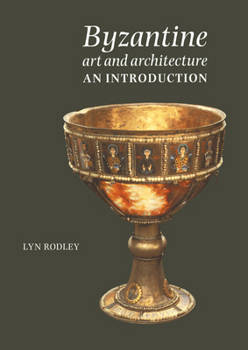
Byzantine Art and Architecture: An Introduction

Select Format
Select Condition 
Book Overview
The Byzantine empire began with the transformation of the Roman empire initiated by the official acceptance of Christianity and the establishment of Constantinople as the capital city. It ended with the fall of that city to the Ottoman Turks in 1453. The art and architecture of the empire reflects its changing fortunes, the development of Christianity, and the cultural influences that affected it. This book offers a systematic introduction to the material culture of the Byzantine empire, from the fourth to the fourteenth centuries. It provides for the student or any other interested reader a compendium of material which is generally difficult to access: much of the writing on Byzantine art and architecture is not in English, and is published as articles in scholarly journals. The book sets out the subject in an accessible manner, describing and discussing by period the surviving material - and that which can be reconstructed from documentary sources - and exploring its social/historical context. The text is copiously illustrated by well over 400 halftones, plans and maps.
Format:Paperback
Language:English
ISBN:0521357241
ISBN13:9780521357241
Release Date:July 1996
Publisher:Cambridge University Press
Length:396 Pages
Weight:0.95 lbs.
Dimensions:1.0" x 8.2" x 11.5"
Related Subjects
Architecture Art Art History Arts, Music & Photography History Humanities ReferenceCustomer Reviews
1 rating
Finally ! An high caliber, sensible introduction
Published by Thriftbooks.com User , 28 years ago
Honestly, the first of its kind. A rich and truly significant era of art history meticulously researched has produced a truly wonderful volume aimed at university-level students, with thorough additional sources thoughtfully appended. Rodley is a leading British scholar of this period, with outstanding field experience. Majority of pictures are her own, and beautifully rendered. Absolutely should be a required text all art/art history libraries. A significant contribution to the canon. Future textbooks would do well to follow Rodley's lead in style and presentation.
Copyright © 2026 Thriftbooks.com
Terms of Use | Privacy Policy | Do Not Sell/Share My Personal Information | Cookie Policy | Cookie Preferences | Accessibility Statement
ThriftBooks ® and the ThriftBooks ® logo are registered trademarks of Thrift Books Global, LLC
ThriftBooks ® and the ThriftBooks ® logo are registered trademarks of Thrift Books Global, LLC
