


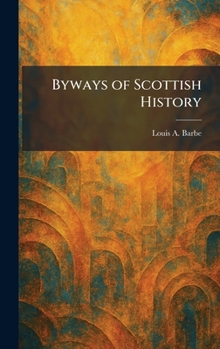
Byways of Scottish History

"In Byways of Scottish History" is a compelling collection of historical essays and sketches that delve into the lesser-known episodes and fascinating personalities of Scotland's past. Author Louis A. Barbe brings a meticulous eye for detail to various facets of Scottish life, ranging from the dramatic era of Mary, Queen of Scots to the social customs and daily experiences of ordinary people in centuries gone by.
This work serves as an essential companion for those wishing to move beyond standard historical narratives. Barbe explores diverse subjects such as the "Song of Mary Stuart," the history of the "Gowrie Conspiracy," and the lives of Scottish soldiers serving abroad. By focusing on these peripheral yet significant moments, the author provides a richer, more nuanced understanding of the cultural and political landscape of Scotland. Written with both scholarly rigor and a sense of narrative flair, the book captures the spirit of the Scottish people and the complexities of their heritage.
Whether examining royal intrigue or traditional legends, "In Byways of Scottish History" remains a valuable resource for historians and enthusiasts alike. It offers a unique window into the social history and folklore of a nation, preserving the stories that define the character of Scotland.
This work has been selected by scholars as being culturally important, and is part of the knowledge base of civilization as we know it. This work was reproduced from the original artifact, and remains as true to the original work as possible. Therefore, you may see the original copyright references, library stamps (as most of these works have been housed in our most important libraries around the world), and other notations in the work.
This work is in the public domain in the United States of America, and possibly other nations. Within the United States, you may freely copy and distribute this work, as no entity (individual or corporate) has a copyright on the body of the work.
As a reproduction of a historical artifact, this work may contain missing or blurred pages, poor pictures, errant marks, etc. Scholars believe, and we concur, that this work is important enough to be preserved, reproduced, and made generally available to the public. We appreciate your support of the preservation process, and thank you for being an important part of keeping this knowledge alive and relevant.
Related Subjects
HistoryCustomer Reviews
ThriftBooks ® and the ThriftBooks ® logo are registered trademarks of Thrift Books Global, LLC
