


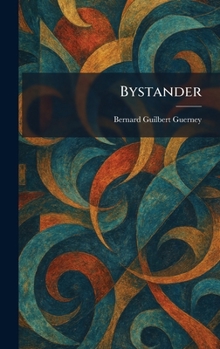
Bystander

"Bystander" is the first volume of Maxim Gorky's monumental tetralogy, "The Life of Klim Samgin", a sweeping epic that captures the soul of a nation in flux. Set against the turbulent backdrop of Russia from the late nineteenth century through the 1917 Revolution, the novel follows the life of Klim Samgin, a member of the intelligentsia who remains a detached observer of the seismic shifts in his society. Through Samgin's eyes, readers witness the decline of the old imperial order, the rise of revolutionary fervor, and the complex interplay of political and philosophical ideologies that defined the era.
Gorky meticulously weaves a dense tapestry of Russian life, populating the narrative with a diverse cast of characters representing various social strata and intellectual circles. "Bystander" is not only a profound psychological portrait of a man caught between observation and action, but also a masterful historical narrative that explores the spiritual and political crises of the Russian people. This work stands as a cornerstone of twentieth-century literature, offering an unparalleled glimpse into the intellectual climate of a country on the brink of total transformation. Its rich prose and deep philosophical inquiries ensure its place as a classic of world fiction.
This work has been selected by scholars as being culturally important, and is part of the knowledge base of civilization as we know it. This work was reproduced from the original artifact, and remains as true to the original work as possible. Therefore, you may see the original copyright references, library stamps (as most of these works have been housed in our most important libraries around the world), and other notations in the work.
This work is in the public domain in the United States of America, and possibly other nations. Within the United States, you may freely copy and distribute this work, as no entity (individual or corporate) has a copyright on the body of the work.
As a reproduction of a historical artifact, this work may contain missing or blurred pages, poor pictures, errant marks, etc. Scholars believe, and we concur, that this work is important enough to be preserved, reproduced, and made generally available to the public. We appreciate your support of the preservation process, and thank you for being an important part of keeping this knowledge alive and relevant.
Customer Reviews
ThriftBooks ® and the ThriftBooks ® logo are registered trademarks of Thrift Books Global, LLC
