


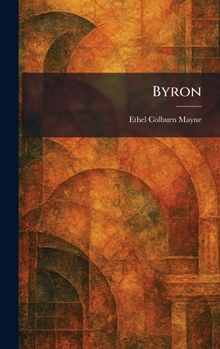
Byron

Select Format
Select Condition 
Book Overview
"Byron" is a comprehensive and authoritative biography of George Gordon Byron, one of the most influential and controversial figures of the Romantic era. Written by Ethel Colburn Mayne, a noted biographer of the period, this work offers a detailed exploration of the poet's life, his revolutionary works, and his complex personal relationships. The narrative delves into Byron's meteoric rise to fame following the publication of "Childe Harold's Pilgrimage," his scandalous reputation in London society, and his eventual departure from England.
Through meticulous research and psychological insight, Mayne presents a nuanced portrait of a man torn between melancholy and wit, tradition and rebellion. The book examines the creative impulses behind his major poems, including "Don Juan" and "Manfred," while contextualizing his life within the broader European political and social landscape of the nineteenth century. From the shores of Italy to the battlefields of Greece, this biography captures the spirit of a literary giant whose influence continues to resonate in the modern world. It is an essential read for those interested in English literature, the Romantic movement, and the lives of history's most fascinating individuals.
This work has been selected by scholars as being culturally important, and is part of the knowledge base of civilization as we know it. This work was reproduced from the original artifact, and remains as true to the original work as possible. Therefore, you may see the original copyright references, library stamps (as most of these works have been housed in our most important libraries around the world), and other notations in the work.
This work is in the public domain in the United States of America, and possibly other nations. Within the United States, you may freely copy and distribute this work, as no entity (individual or corporate) has a copyright on the body of the work.
As a reproduction of a historical artifact, this work may contain missing or blurred pages, poor pictures, errant marks, etc. Scholars believe, and we concur, that this work is important enough to be preserved, reproduced, and made generally available to the public. We appreciate your support of the preservation process, and thank you for being an important part of keeping this knowledge alive and relevant.
Customer Reviews
ThriftBooks ® and the ThriftBooks ® logo are registered trademarks of Thrift Books Global, LLC
