


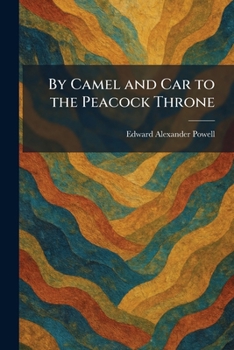
By Camel and Car to the Peacock Throne

"By Camel and Car to the Peacock Throne" is a captivating travel narrative that chronicles Edward Alexander Powell's adventurous journey across the Middle East in the early 20th century. Traveling by various means, including camel and motorcar, Powell provides a detailed account of his trek from the shores of the Mediterranean to the historic city of Tehran, the seat of the Persian Empire.
This work offers a vivid window into a region undergoing significant transformation, capturing the landscapes, cultures, and political climate of territories such as Syria, Iraq, and Persia during the 1920s. Powell's prose is both descriptive and insightful, documenting encounters with local tribes, colonial officials, and the architectural wonders of the ancient world. As a classic piece of travel literature, "By Camel and Car to the Peacock Throne" serves as an important historical record of the transition from traditional to modern modes of travel and the enduring allure of the East. It remains an essential read for those interested in the history of Middle Eastern exploration and the geopolitical shifts following the Great War.
This work has been selected by scholars as being culturally important, and is part of the knowledge base of civilization as we know it. This work was reproduced from the original artifact, and remains as true to the original work as possible. Therefore, you may see the original copyright references, library stamps (as most of these works have been housed in our most important libraries around the world), and other notations in the work.
This work is in the public domain in the United States of America, and possibly other nations. Within the United States, you may freely copy and distribute this work, as no entity (individual or corporate) has a copyright on the body of the work.
As a reproduction of a historical artifact, this work may contain missing or blurred pages, poor pictures, errant marks, etc. Scholars believe, and we concur, that this work is important enough to be preserved, reproduced, and made generally available to the public. We appreciate your support of the preservation process, and thank you for being an important part of keeping this knowledge alive and relevant.
Customer Reviews
ThriftBooks ® and the ThriftBooks ® logo are registered trademarks of Thrift Books Global, LLC
