


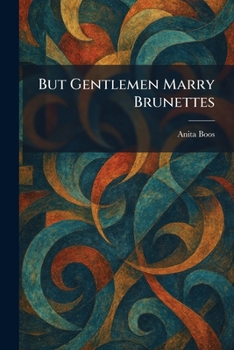
But Gentlemen Marry Brunettes

"But Gentlemen Marry Brunettes" is the sparkling and witty sequel to the iconic "Gentlemen Prefer Blondes". Narrated by the irrepressible Lorelei Lee, this satirical novel shifts the spotlight to her best friend, the cynical and sharp-tongued Dorothy Shaw. As Lorelei recounts Dorothy's upbringing and various romantic misadventures, she provides a hilariously astute critique of the social mores and excesses of the 1920s.
Set against the backdrop of the Jazz Age, the story follows the duo through a series of comedic escapades that highlight the era's obsession with wealth, status, and celebrity. The work uses a unique vernacular and phonetic style to capture the voice of its protagonist, blending naive charm with biting social commentary. It remains a definitive piece of flapper-era literature, offering a timeless exploration of female friendship and the art of navigating a male-dominated society. Readers will be enchanted by the clever dialogue and the vivid portrayal of the "Lost Generation" seeking fortune and fun in an ever-changing world. This classic work captures the spirit of an age while maintaining a sharp, modern sense of humor that continues to resonate today.
This work has been selected by scholars as being culturally important, and is part of the knowledge base of civilization as we know it. This work was reproduced from the original artifact, and remains as true to the original work as possible. Therefore, you may see the original copyright references, library stamps (as most of these works have been housed in our most important libraries around the world), and other notations in the work.
This work is in the public domain in the United States of America, and possibly other nations. Within the United States, you may freely copy and distribute this work, as no entity (individual or corporate) has a copyright on the body of the work.
As a reproduction of a historical artifact, this work may contain missing or blurred pages, poor pictures, errant marks, etc. Scholars believe, and we concur, that this work is important enough to be preserved, reproduced, and made generally available to the public. We appreciate your support of the preservation process, and thank you for being an important part of keeping this knowledge alive and relevant.
Customer Reviews
ThriftBooks ® and the ThriftBooks ® logo are registered trademarks of Thrift Books Global, LLC
