


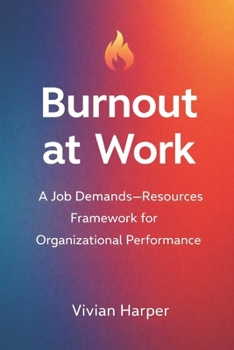
Burnout at Work: A Job Demands-Resources Framework for Organizational Performance

Burnout is not simply overwork. It is a structural imbalance between demands and resources.
In Burnout at Work, Vivian Harper applies the Job Demands-Resources (JD-R) framework to examine how organizational systems, role design, and leadership practices shape employee strain, disengagement, and performance decline. Rather than treating burnout as an individual weakness, this book analyzes it as a predictable outcome of misaligned workloads, insufficient recovery, and poorly structured incentives.
Grounded in organizational psychology and management research, this book explores:
The mechanics of job demands and resource depletion
How autonomy, feedback, and social support buffer strain
The relationship between engagement, exhaustion, and performance
Structural interventions that shift risk from individuals to systems
Practical implications for HR leaders, managers, and executives
Designed for professionals in leadership, human resources, organizational development, and behavioral science, this book offers a rigorous, theory-based perspective on workplace exhaustion and performance sustainability.
If you are responsible for designing roles, managing teams, or shaping workplace policy, this book provides a structured framework for understanding burnout as an organizational phenomenon, not a personal failure.
Customer Reviews
ThriftBooks® and the ThriftBooks® logo are registered trademarks of Thrift Books Global, LLC
