


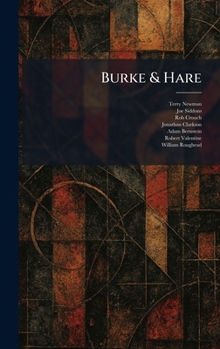
Burke & Hare

Select Format
Select Condition 
Book Overview
"Burke & Hare" explores one of the most chilling chapters in the history of British crime. Set in the dark, winding alleys of 19th-century Edinburgh, this work recounts the notorious series of murders committed by William Burke and William Hare in 1828. Driven by the demand for anatomical subjects in the city's prestigious medical schools, the duo turned from simple grave robbing to a more direct and deadly method of procuring bodies for dissection.
Through meticulous detail, the narrative examines the social conditions of the West Port district that allowed such atrocities to go unnoticed and the legal proceedings that eventually brought the killers to justice. This account delves into the psychological and societal implications of the crimes, capturing the public's fascination and horror. "Burke & Hare" remains a seminal study of the intersection between medical necessity and moral depravity, offering a grimly fascinating look at a case that forever changed Scottish law and the ethics of medical science. It serves as an essential historical record of a city gripped by fear and the dark side of the Enlightenment.
This work has been selected by scholars as being culturally important, and is part of the knowledge base of civilization as we know it. This work was reproduced from the original artifact, and remains as true to the original work as possible. Therefore, you may see the original copyright references, library stamps (as most of these works have been housed in our most important libraries around the world), and other notations in the work.
This work is in the public domain in the United States of America, and possibly other nations. Within the United States, you may freely copy and distribute this work, as no entity (individual or corporate) has a copyright on the body of the work.
As a reproduction of a historical artifact, this work may contain missing or blurred pages, poor pictures, errant marks, etc. Scholars believe, and we concur, that this work is important enough to be preserved, reproduced, and made generally available to the public. We appreciate your support of the preservation process, and thank you for being an important part of keeping this knowledge alive and relevant.
Related Subjects
True CrimeCustomer Reviews
ThriftBooks ® and the ThriftBooks ® logo are registered trademarks of Thrift Books Global, LLC
