


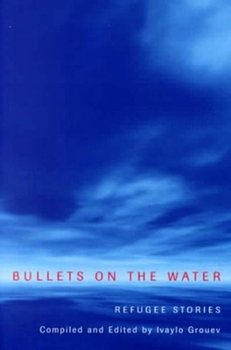
Bullets on the Water: Refugee Stories
No Customer Reviews

Select Format
Select Condition 
Book Overview
Civil wars in Africa, the collapse of the central regime in Somalia, genocide in Rwanda, the Persian Gulf war in the Middle East, the collapse of the military regimes in Central America, new ethnic clashes in the former USSR - all these events have resulted in an increased number of displaced people, most of whom never expected to find themselves in such a situation. Their refusal to accept the division of their countries into separate ethnic, religious, or political groups or to participate in dubious political games exacted a heavy price - they lost their homelands and became refugees.
"Is it OK not to be afraid of losing your country, all your past, all your friends, and to create a new life in a new place?" These stories show what it means to find yourself a stranger in your homeland and the difficulties to be overcome before you feel at home again. Most importantly, however, these stories tell us about acceptance and the need to bridge differences in language, religion, culture, and traditions. Bullets on the Water makes it clear that most refugees in Canada have an unquestionable belief in the importance of acceptance, tolerance, and respect for difference. Their choice to become refugees was dictated not only by the dynamics of political events but, perhaps even more, by the fact that the culture of animosity, violence, and hatred was completely foreign to them. From the book:"I began to yell my name. This is the only way to announce that you have been arrested or detained and that you might disappear. You have to yell your name, because this is the only way to get this message to an international NGO (non-governmental organization) operating in Guatemala. This desperate gesture worked for many Guatemalans who were detained. In Guatemala itself, there was no information whatsoever about who was arrested and what happened to those in prison." "I did not remember anything. I realized that I was in Yugoslavia. I was transferred to Titograd and later to Belgrade. I spent months in a camp headed by the UN. There I understood what really did happen. Four people were killed. One of them was an eight-year-old child."
Format:Paperback
Language:English
ISBN:0773521178
ISBN13:9780773521179
Release Date:September 2000
Publisher:McGill-Queen's University Press
Length:200 Pages
Weight:0.45 lbs.
Dimensions:0.5" x 5.5" x 8.5"
Customer Reviews
0 rating
Copyright © 2026 Thriftbooks.com
Terms of Use | Privacy Policy | Do Not Sell/Share My Personal Information | Cookie Policy | Cookie Preferences | Accessibility Statement
ThriftBooks ® and the ThriftBooks ® logo are registered trademarks of Thrift Books Global, LLC
ThriftBooks ® and the ThriftBooks ® logo are registered trademarks of Thrift Books Global, LLC
