


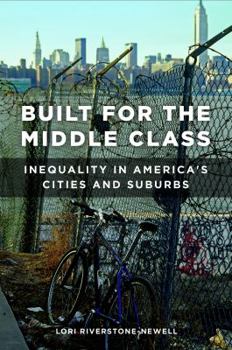
Built for the Middle Class: Inequality in America's Cities and Suburbs

The construction and design of America's cities--their residential and retail areas, streets and buildings, land use choices and transportation systems--show a distinct bias toward the middle class, which has reinforced, if not caused, many of the disadvantages of the poor and working class in today's cities. How and why did this happen? What are the cumulative impacts of these changes and developments on the rest of society?
Built for the Middle Class: Inequality in America's Cities and Suburbs investigates how America's central and suburban cities have consistently been designed to meet the needs and desires of the American middle class. It explains how the growth of the middle class over the past two centuries has prompted the design and construction decisions made by public and private sectors that are increasingly geared toward the social and economic benefit of the middle class, at the expense of lower-income citizens. By taking an historical perspective, authorRiverstone-Newell brings to light the engineered evolution of our nation's urban elements and the resulting geographic and social divisions in society.
Customer Reviews
ThriftBooks ® and the ThriftBooks ® logo are registered trademarks of Thrift Books Global, LLC
