


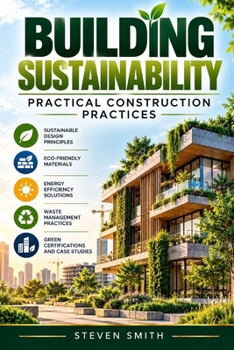
Building Sustainability: Practical Construction Practices

Build for more than immediate performance. Apply construction practices that conserve resources, improve efficiency, and contribute to a more sustainable built environment.
Buildings consume materials, energy, water, and other resources throughout their lifecycles. Decisions made during design and construction can therefore have lasting environmental, economic, and social consequences. Sustainable construction responds to these challenges by integrating resource efficiency, responsible material selection, energy performance, waste reduction, resilience, and healthier built environments into project decision-making.
BUILDING SUSTAINABILITY: PRACTICAL CONSTRUCTION PRACTICES provides practical guidance on the principles and approaches that support environmentally responsible, resource-efficient, and economically informed construction.
The central question is:
How can construction professionals reduce environmental impacts while improving resource efficiency, building performance, resilience, and long-term value?
FROM SUSTAINABILITY PRINCIPLES TO PRACTICAL CONSTRUCTION
This book explores:
Sustainable design and construction: Understand the principles that support environmentally responsible building design and project delivery.
Sustainable building materials: Explore considerations for selecting materials that can reduce environmental impacts and improve building performance.
Energy efficiency: Examine strategies for reducing building energy demand and dependence on fossil fuels.
Natural resource conservation: Understand the importance of responsible material, water, and energy consumption throughout construction.
Construction waste management: Explore approaches to minimising, managing, and reducing waste generated during construction activities.
Green building certification: Understand the role of environmental assessment and certification systems in supporting sustainability objectives.
Financial considerations: Examine the economic implications of sustainable construction decisions and their relationship to long-term building value.
Building resilience: Explore the importance of designing and constructing buildings that can respond to changing environmental and operational conditions.
Practical case studies: Connect sustainability principles with examples of their application in construction projects.
SUSTAINABILITY IS A SERIES OF CONNECTED CONSTRUCTION DECISIONS
A sustainable building is not defined by a single material, technology, or environmental certification. Its performance reflects interconnected decisions concerning design, materials, energy, resources, waste, cost, and long-term adaptability.
This book brings these considerations together, helping readers understand how sustainability can be incorporated into construction decisions rather than treated as an isolated environmental requirement.
The emphasis is on developing a practical understanding of the approaches that can reduce environmental pressures while supporting efficient, resilient, and healthier buildings.
WHO THIS BOOK IS FOR
Construction and project managers
Architects, engineers, and building professionals
Contractors and construction practitioners
Sustainability and environmental professionals
Property and facilities managers
Built-environment students, academics, and researchers
Anyone seeking a practical understanding of sustainable construction
Building sustainably means looking beyond immediate construction requirements to consider how today's decisions will influence environmental performance, resource consumption, resilience, operating efficiency, and the quality of the built environment for years to come.
Customer Reviews
ThriftBooks ® and the ThriftBooks ® logo are registered trademarks of Thrift Books Global, LLC
