


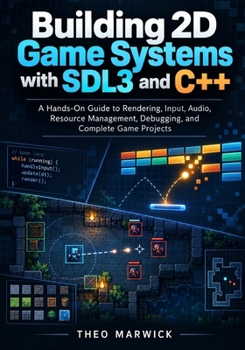
Building 2D Game Systems with SDL3 and C++: A Hands-On Guide to Rendering, Input, Audio, Resource Management, Debugging, and Complete Game Projects

Want to create your own 2D game but feel overwhelmed by all the code, tools, and moving parts? You can start small and build something real, one working feature at a time.
Building 2D Game Systems with SDL3 and C++ takes you from your first SDL3 application to two complete, playable games: an arcade brick-breaker and a top-down arena action game.
With clear explanations, manageable code examples, and practical exercises, you'll discover how game development works behind the scenes. No previous SDL3 or game-development experience is required. Basic familiarity with C++ is recommended, and each new concept is introduced step by step.
You'll learn by building, testing, making improvements, and solving problems. Mistakes become opportunities to learn, while every working feature brings you closer to creating games of your own.
Key FeaturesTwo Complete Game Projects: Build Signal Breaker, an arcade brick-breaker, and Pulse Arena, a top-down action game.
Step-by-Step Learning: Follow clear instructions and manageable C++ code examples that build on previous lessons.
Practical Exercises: Reinforce your skills through hands-on challenges and meaningful improvements.
Real Game Development Skills: Learn reusable techniques for organizing, debugging, testing, and distributing games.
What You Will LearnSet up SDL3, modern C++, and CMake for cross-platform development.
Build responsive game loops, handle player input, and render interactive objects.
Implement movement, collision detection, scoring, and gameplay states.
Create textures, sprite animations, sound effects, and visual feedback.
Develop projectile systems, enemy behavior, and wave-based gameplay.
Manage resources safely, troubleshoot errors, optimize performance, and package finished games.
Who This Book Is ForThis book is designed for aspiring game developers, students, hobbyists, and self-taught programmers who want to build practical 2D games without relying on a complete game engine.
Whether you're exploring game development for the first time or looking to apply your basic C++ knowledge to real projects, this guide provides a structured, approachable path from simple applications to complete games.
Table of ContentsChapter 1: Getting Started with SDL3 and Modern C++
Chapter 2: Application Lifecycle, Input, and Game Loops
Chapter 3: 2D Rendering, Movement, and Game Objects
Chapter 4: Collision Detection and Arcade Gameplay Systems
Chapter 5: Completing the Arcade Game and Organizing Code
Chapter 6: Textures, Animation, and Resource Management
Chapter 7: Player Movement, Aiming, and Projectile Systems
Chapter 8: Enemy Behavior, Audio, and Game Progression
Chapter 9: Debugging, Testing, and Performance Optimization
Chapter 10: Building, Packaging, and Distributing SDL3 Games
Start Building Your Own Games TodayTake the first step from understanding code to creating interactive experiences. Build your confidence, complete two playable projects, and develop the practical skills to bring your own game ideas to life.
Your game-development journey starts here.
Customer Reviews
ThriftBooks ® and the ThriftBooks ® logo are registered trademarks of Thrift Books Global, LLC
