


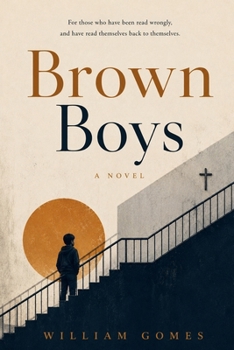
Brown Boys

A powerful contemporary British literary novel about brown childhood, family love, faith, disability, institutional misreading and the cost of being recorded wrongly.
At the kitchen table on Hempland Lane, Reuben keeps a folder called Records. Around him are the small objects that hold a family together: a cold cup of tea, a closed laptop, a worn blanket, a missal, a rosary, a spelling card, a kettle, a staircase, a child's silence.
His sons have learned the language of systems before they should have had to. Their bodies are read by schools, panels, parish rooms, car parks, contact centres and tribunals. Their parents keep writing, keep asking, keep recording, and learn how quickly a record can be turned back against the family that made it.
Daniel knows the blanket, the bedroom, the stair, the hum, the spelling cards and the careful routes by which the body survives. Samuel has his flashcards, his words, his questions and his own way of ordering the world. Lily carries the missal, the food, the phone calls, the laundry, the prayer and the quiet labour of keeping the house from breaking. Reuben carries the laptop, the files, the meetings, the evidence, and the long discipline of writing down what others refuse to hear.
Across kitchens, bedrooms, Mass, school corridors, complaint meetings, supermarket aisles, parish silences, tribunal hearings and contact rooms, Brown Boys follows a family whose love is forced to pass through institutional grammar.
Written with restraint, precision and moral force, this is a contemporary literary novel about autism, race, Catholic faith, parental witness, SEND systems, safeguarding pressure, tribunal records, family separation and the lives that official language fails to hold.
For those who have been read wrongly, and have read themselves back to themselves.
Customer Reviews
ThriftBooks ® and the ThriftBooks ® logo are registered trademarks of Thrift Books Global, LLC
