


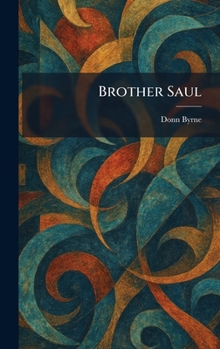
Brother Saul

"Brother Saul" is a sweeping historical novel that chronicles the dramatic life and spiritual transformation of Saul of Tarsus, the man who would become Saint Paul the Apostle. Set against the vibrant and volatile backdrop of the first-century Roman Empire, the narrative explores the complex intersections of Jewish tradition, Roman law, and the burgeoning Christian faith. Author Donn Byrne brings the ancient world to life with lyrical prose, depicting Saul's early years as a brilliant student and a zealous persecutor of the new sect before his life-altering experience on the road to Damascus.
The work delves into the psychological and emotional depths of its protagonist, portraying him as a man of fierce intellect and unyielding passion. As the story follows his missionary journeys across the Mediterranean, it illustrates the challenges of spreading a new message in a landscape filled with cultural tension and political danger. "Brother Saul" is more than a biographical sketch; it is a vivid reimagining of a pivotal era in human history, focusing on themes of redemption, sacrifice, and the relentless pursuit of truth. This compelling literary work offers a humanizing perspective on one of the most influential figures in Western civilization, highlighting the enduring power of personal conviction.
This work has been selected by scholars as being culturally important, and is part of the knowledge base of civilization as we know it. This work was reproduced from the original artifact, and remains as true to the original work as possible. Therefore, you may see the original copyright references, library stamps (as most of these works have been housed in our most important libraries around the world), and other notations in the work.
This work is in the public domain in the United States of America, and possibly other nations. Within the United States, you may freely copy and distribute this work, as no entity (individual or corporate) has a copyright on the body of the work.
As a reproduction of a historical artifact, this work may contain missing or blurred pages, poor pictures, errant marks, etc. Scholars believe, and we concur, that this work is important enough to be preserved, reproduced, and made generally available to the public. We appreciate your support of the preservation process, and thank you for being an important part of keeping this knowledge alive and relevant.
Customer Reviews
ThriftBooks® and the ThriftBooks® logo are registered trademarks of Thrift Books Global, LLC
