


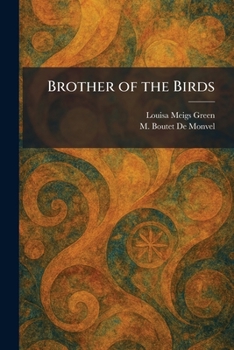
Brother of the Birds

"Brother of the Birds" is a lyrical and evocative exploration of the life of Saint Francis of Assisi, the humble friar whose devotion to poverty and peace transformed the medieval world. The narrative follows Francis from his early life in Italy through his spiritual transformation and his founding of the Franciscan Order, highlighting the radical simplicity and joy that characterized his journey. By focusing on his profound connection to the natural world, the work illustrates why Francis has long been celebrated as a patron of animals and the environment.
The book brings to life the legendary stories associated with the saint, including his gentle interactions with wildlife and his unwavering commitment to serving the marginalized. It captures the historical and spiritual essence of a man who sought to find the divine in all of creation, emphasizing themes of compassion, humility, and universal brotherhood. Through its descriptive prose, "Brother of the Birds" serves as both a historical biography and a source of spiritual inspiration, offering readers a window into the enduring legacy of one of history's most beloved figures. This work remains a poignant tribute to the power of faith and the beauty of the natural world.
This work has been selected by scholars as being culturally important, and is part of the knowledge base of civilization as we know it. This work was reproduced from the original artifact, and remains as true to the original work as possible. Therefore, you may see the original copyright references, library stamps (as most of these works have been housed in our most important libraries around the world), and other notations in the work.
This work is in the public domain in the United States of America, and possibly other nations. Within the United States, you may freely copy and distribute this work, as no entity (individual or corporate) has a copyright on the body of the work.
As a reproduction of a historical artifact, this work may contain missing or blurred pages, poor pictures, errant marks, etc. Scholars believe, and we concur, that this work is important enough to be preserved, reproduced, and made generally available to the public. We appreciate your support of the preservation process, and thank you for being an important part of keeping this knowledge alive and relevant.
Customer Reviews
ThriftBooks ® and the ThriftBooks ® logo are registered trademarks of Thrift Books Global, LLC
