


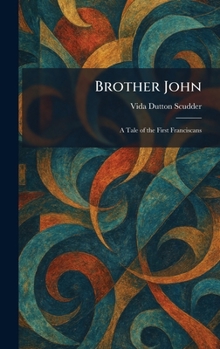
Brother John: A Tale of the First Franciscans

"Brother John; A Tale of the First Franciscans" is a compelling historical novel that transports readers to the 13th century, a time of profound spiritual upheaval and renewal. The narrative follows the journey of John, a young man drawn to the radical ideals of Saint Francis of Assisi. As the early Franciscan movement grapples with the tensions between its foundational vow of absolute poverty and the growing institutional demands of the Church, the story explores the lived reality of those who sought to follow the "Poverello" in his imitation of Christ.
Through rich historical detail and deep theological insight, the work captures the essence of the medieval religious experience. It delves into themes of communal devotion, humility, and the pursuit of a pure Christian life amidst a changing social landscape. The protagonist's journey serves as a window into the hearts of the first friars, who sought to transform the world through love and simplicity. This work stands as a significant contribution to religious historical fiction, offering a poignant look at one of the most transformative periods in Western spiritual history and the enduring struggle to balance spiritual purity with the realities of the material world.
This work has been selected by scholars as being culturally important, and is part of the knowledge base of civilization as we know it. This work was reproduced from the original artifact, and remains as true to the original work as possible. Therefore, you may see the original copyright references, library stamps (as most of these works have been housed in our most important libraries around the world), and other notations in the work.
This work is in the public domain in the United States of America, and possibly other nations. Within the United States, you may freely copy and distribute this work, as no entity (individual or corporate) has a copyright on the body of the work.
As a reproduction of a historical artifact, this work may contain missing or blurred pages, poor pictures, errant marks, etc. Scholars believe, and we concur, that this work is important enough to be preserved, reproduced, and made generally available to the public. We appreciate your support of the preservation process, and thank you for being an important part of keeping this knowledge alive and relevant.
Customer Reviews
ThriftBooks ® and the ThriftBooks ® logo are registered trademarks of Thrift Books Global, LLC
