


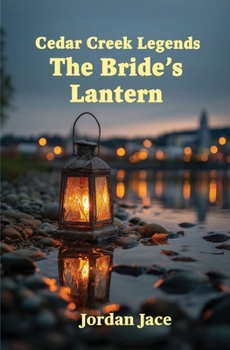
Bride's Lantern : Cedar Creek Legends Book 5

In 1846, a young bride stood alone at the edge of Cedar Creek, clutching the lantern meant to guide her to her wedding. Her groom never came. With the chapel bell silent and the town's whispers gathering behind her, she carried the flame into the river and disappeared. By morning, the lantern had returned to shore-its glass unbroken and, some claimed, its light still burning without oil.
From that night forward, the Bride's Lantern became Cedar Creek's most enduring legend. Some believed it appeared as a warning whenever vows were betrayed. Others said it came as a guide, offering light to those brave enough to repair what had been broken. For generations, the people of Cedar Creek carried it to weddings, reconciliations, and moments when promises needed to be spoken again.
Walking alone beside the river, Miriam Adler sees an impossible glow moving steadily through the reeds. It does not sway like a fisherman's lamp or flicker like an ordinary flame. It waits for her. When she steps closer, it vanishes, leaving behind a single word written on an old ribbon tied to the willow fence: Keep.
At her side is Julian Roth, the museum historian whose devotion to evidence has always balanced Miriam's trust in intuition. Their partnership has deepened through every mystery they have faced, but the Festival of Vows places their own relationship beneath the lantern's searching light. Miriam and Julian can help others speak of commitment, reconciliation, and belonging. Living those promises themselves is far more frightening. Both have known the cost of love lost, and neither wants tenderness to become another vow that cannot survive the truth.
Their search leads through chapel ledgers, family records, concealed pledges, and the forgotten identity of the bride whose tragedy became public folklore. Pastor Elijah knows more than he is willing to reveal, including a generational betrayal connecting two prominent Cedar Creek families. He warns Miriam that exposing the past could fracture the town beyond repair. Yet the lantern continues to glow whenever pride replaces honesty and silence protects the powerful.
To uncover what the light is asking of them, Miriam and Julian must distinguish covenant from control, forgiveness from concealment, and faithful keeping from remaining trapped in a promise that causes harm. The mystery reaches beyond marriage, touching promises between families, neighbors, spiritual leaders, and the town itself. Every revelation asks whether belonging is created by preserving a flawless history or by having the courage to confess where that history failed.
As public vows tremble and private secrets emerge, Cedar Creek must decide whether its cherished legend will remain a story displayed behind glass-or become a living call to truth, mercy, and restoration.
Rich with Pacific Northwest atmosphere, small-town intrigue, historical secrets, gentle supernatural suspense, spiritual symbolism, and a deeply felt slow-burning romance, The Bride's Lantern is a luminous mystery about the promises that make a people, the truths that set them free, and the courage required to choose one another again.
The lantern has returned to the river.
This time, it is not searching for the bride who vanished.
It is waiting for Cedar Creek to answer the vow she left behind.
Customer Reviews
ThriftBooks ® and the ThriftBooks ® logo are registered trademarks of Thrift Books Global, LLC
