


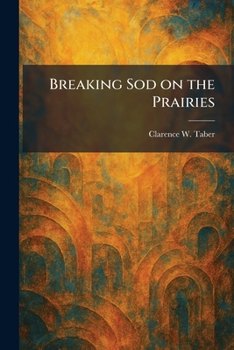
Breaking Sod on the Prairies

Select Format
Select Condition 
Book Overview
"Breaking Sod on the Prairies" offers a vivid and authentic portrayal of the pioneer experience during the settlement of the American West. Written by Clarence W. Taber, this narrative captures the arduous journey and the resilient spirit of those who sought to transform the vast, untouched grasslands into productive farmland. The work provides a detailed look at the daily challenges faced by early settlers, from the physical labor of breaking the thick prairie sod to the social and environmental hurdles of living on the frontier.
Focusing on the historical and cultural development of the Great Plains, the book serves as both a personal memoir and a broader historical account of a formative era in American history. Readers will gain insight into the agricultural techniques, community building, and personal perseverance required to establish a foothold in the wilderness. Taber's writing emphasizes the profound connection between the settlers and the land, documenting the evolution of the prairie from a wild expanse to the agricultural heartland of the nation. This work remains a valuable resource for anyone interested in the history of the American frontier, pioneer life, and the enduring legacy of the midwestern settlers.
This work has been selected by scholars as being culturally important, and is part of the knowledge base of civilization as we know it. This work was reproduced from the original artifact, and remains as true to the original work as possible. Therefore, you may see the original copyright references, library stamps (as most of these works have been housed in our most important libraries around the world), and other notations in the work.
This work is in the public domain in the United States of America, and possibly other nations. Within the United States, you may freely copy and distribute this work, as no entity (individual or corporate) has a copyright on the body of the work.
As a reproduction of a historical artifact, this work may contain missing or blurred pages, poor pictures, errant marks, etc. Scholars believe, and we concur, that this work is important enough to be preserved, reproduced, and made generally available to the public. We appreciate your support of the preservation process, and thank you for being an important part of keeping this knowledge alive and relevant.
Customer Reviews
ThriftBooks ® and the ThriftBooks ® logo are registered trademarks of Thrift Books Global, LLC
