


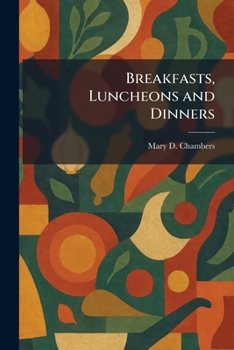
Breakfasts, Luncheons and Dinners

Select Format
Select Condition 
Book Overview
"Breakfasts, Luncheons and Dinners" is a comprehensive guide to the art of meal planning and domestic management. Written by Mary D. Chambers, this classic work explores the nuances of the three main daily meals, offering practical advice on everything from balanced menus to refined table service. The book provides a fascinating look into early 20th-century dining etiquette, detailing the proper ways to host guests for various occasions, including formal dinners and casual luncheons.
Readers will find a wealth of information on seasonal food selection, the efficient organization of the kitchen, and the aesthetic presentation of dishes. As a window into the evolution of home economics, "Breakfasts, Luncheons and Dinners" remains a valuable resource for culinary historians and those interested in the social history of the American home. With its emphasis on health, economy, and hospitality, it serves as an enduring guide to the foundational elements of the family table and the social graces that define successful entertaining.
This work has been selected by scholars as being culturally important, and is part of the knowledge base of civilization as we know it. This work was reproduced from the original artifact, and remains as true to the original work as possible. Therefore, you may see the original copyright references, library stamps (as most of these works have been housed in our most important libraries around the world), and other notations in the work.
This work is in the public domain in the United States of America, and possibly other nations. Within the United States, you may freely copy and distribute this work, as no entity (individual or corporate) has a copyright on the body of the work.
As a reproduction of a historical artifact, this work may contain missing or blurred pages, poor pictures, errant marks, etc. Scholars believe, and we concur, that this work is important enough to be preserved, reproduced, and made generally available to the public. We appreciate your support of the preservation process, and thank you for being an important part of keeping this knowledge alive and relevant.
Customer Reviews
ThriftBooks ® and the ThriftBooks ® logo are registered trademarks of Thrift Books Global, LLC
