


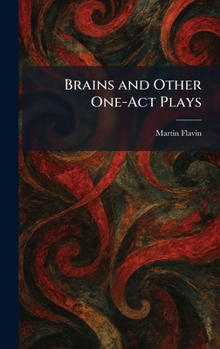
Brains and Other One-Act Plays

"Brains and Other One Act Plays" is a compelling collection of short dramatic works by the acclaimed playwright and novelist Martin Flavin. Composed during a transformative era in American theater, these plays demonstrate Flavin's mastery of the one-act format, blending sharp social observation with profound psychological insight. The title play, "Brains," serves as a focal point for a volume that explores the complexities of human intellect, morality, and social status.
The collection offers a diverse array of narratives, ranging from satirical examinations of high society to poignant glimpses into the struggles of the common individual. Each script is characterized by Flavin's signature wit and his ability to construct tight, impactful scenes that resonate with emotional truth. As a writer who would later achieve great acclaim and win the Pulitzer Prize, Flavin's early dramatic works in this volume provide a fascinating look at the development of a major literary voice. "Brains and Other One Act Plays" remains an essential read for students of drama, performers looking for classic repertoire, and readers interested in the rich heritage of early 20th-century American literature.
This work has been selected by scholars as being culturally important, and is part of the knowledge base of civilization as we know it. This work was reproduced from the original artifact, and remains as true to the original work as possible. Therefore, you may see the original copyright references, library stamps (as most of these works have been housed in our most important libraries around the world), and other notations in the work.
This work is in the public domain in the United States of America, and possibly other nations. Within the United States, you may freely copy and distribute this work, as no entity (individual or corporate) has a copyright on the body of the work.
As a reproduction of a historical artifact, this work may contain missing or blurred pages, poor pictures, errant marks, etc. Scholars believe, and we concur, that this work is important enough to be preserved, reproduced, and made generally available to the public. We appreciate your support of the preservation process, and thank you for being an important part of keeping this knowledge alive and relevant.
Related Subjects
DramaCustomer Reviews
ThriftBooks ® and the ThriftBooks ® logo are registered trademarks of Thrift Books Global, LLC
