


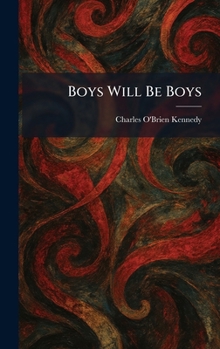
Boys Will Be Boys

"Boys Will Be Boys" is a delightful American comedy that captures the whimsical spirit of second chances and the enduring power of childhood dreams. Based on the celebrated stories by Irvin S. Cobb, this play centers on the character of Peleg White, a man who finds himself suddenly wealthy after a life of modest means. Rather than conforming to the rigid expectations of his new social standing, White chooses to spend his fortune on the simple, mischievous pleasures he missed out on as a boy.
Set against the backdrop of a quaint Kentucky town, the work is filled with humor, warmth, and a touch of satire. It explores themes of nostalgia, the innocence of youth, and the irony of adulthood. As Peleg White navigates his way through schoolboy pranks and local gossip, the play offers a lighthearted yet poignant reflection on what it means to truly live. "Boys Will Be Boys" remains a classic example of early 20th-century American theater, celebrated for its witty dialogue and its charming depiction of small-town life.
This work has been selected by scholars as being culturally important, and is part of the knowledge base of civilization as we know it. This work was reproduced from the original artifact, and remains as true to the original work as possible. Therefore, you may see the original copyright references, library stamps (as most of these works have been housed in our most important libraries around the world), and other notations in the work.
This work is in the public domain in the United States of America, and possibly other nations. Within the United States, you may freely copy and distribute this work, as no entity (individual or corporate) has a copyright on the body of the work.
As a reproduction of a historical artifact, this work may contain missing or blurred pages, poor pictures, errant marks, etc. Scholars believe, and we concur, that this work is important enough to be preserved, reproduced, and made generally available to the public. We appreciate your support of the preservation process, and thank you for being an important part of keeping this knowledge alive and relevant.
Related Subjects
DramaCustomer Reviews
ThriftBooks ® and the ThriftBooks ® logo are registered trademarks of Thrift Books Global, LLC
