


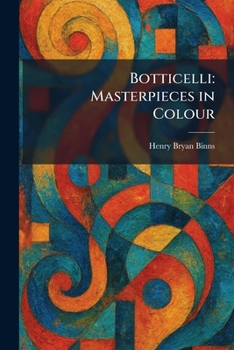
Botticelli: Masterpieces in Colour

Select Format
Select Condition 
Book Overview
"Botticelli: Masterpieces in Colour" offers a captivating exploration of the life and legacy of Sandro Botticelli, one of the most celebrated figures of the Italian Renaissance. Written by Henry Bryan Binns, this work provides an insightful overview of the artist's unique style, characterized by its lyrical grace, intricate detail, and profound emotional depth. The book delves into Botticelli's most iconic creations, from his mythological triumphs like "The Birth of Venus" and "Primavera" to his deeply moving religious paintings and portraits.
Binns situates Botticelli within the vibrant cultural landscape of fifteenth-century Florence, examining the influence of the Medici family and the intellectual currents that shaped his artistic vision. Readers will gain an appreciation for the artist's mastery of line and color, as well as his ability to synthesize classical ideals with spiritual intensity. This volume serves as an excellent introduction for art enthusiasts and scholars alike, celebrating the enduring beauty and technical brilliance of a true master. Whether exploring the delicate features of his Madonnas or the sweeping movements of his allegorical figures, this work highlights why Botticelli remains a cornerstone of Western art history.
This work has been selected by scholars as being culturally important, and is part of the knowledge base of civilization as we know it. This work was reproduced from the original artifact, and remains as true to the original work as possible. Therefore, you may see the original copyright references, library stamps (as most of these works have been housed in our most important libraries around the world), and other notations in the work.
This work is in the public domain in the United States of America, and possibly other nations. Within the United States, you may freely copy and distribute this work, as no entity (individual or corporate) has a copyright on the body of the work.
As a reproduction of a historical artifact, this work may contain missing or blurred pages, poor pictures, errant marks, etc. Scholars believe, and we concur, that this work is important enough to be preserved, reproduced, and made generally available to the public. We appreciate your support of the preservation process, and thank you for being an important part of keeping this knowledge alive and relevant.
Customer Reviews
ThriftBooks ® and the ThriftBooks ® logo are registered trademarks of Thrift Books Global, LLC
