


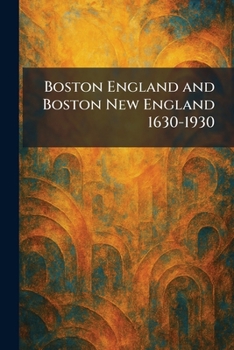
Boston England and Boston New England 1630-1930

"Boston England and Boston New England 1630-1930" explores the profound and enduring connection between the historic town of Boston in Lincolnshire, England, and its namesake city in Massachusetts. This work traces the transatlantic ties that have bound these two communities together for three centuries, chronicling the journey from the early migrations of the 1630s to the tercentenary celebrations of 1930.
The narrative delves into the early seventeenth-century migrations, highlighting the significant role played by the Puritans who departed from the Old World to establish a new life in the Massachusetts Bay Colony. Through detailed historical accounts, the book examines the cultural, religious, and social heritage shared by both locations, offering a unique look at how the legacy of the English town shaped the development and identity of its New England successor.
Readers will find a wealth of information regarding the prominent figures, architectural similarities, and institutional parallels that define this international relationship. "Boston England and Boston New England 1630-1930" serves as both a historical record and a tribute to the shared lineage of two great cities, making it an essential resource for those interested in colonial history, genealogy, and Anglo-American relations.
This work has been selected by scholars as being culturally important, and is part of the knowledge base of civilization as we know it. This work was reproduced from the original artifact, and remains as true to the original work as possible. Therefore, you may see the original copyright references, library stamps (as most of these works have been housed in our most important libraries around the world), and other notations in the work.
This work is in the public domain in the United States of America, and possibly other nations. Within the United States, you may freely copy and distribute this work, as no entity (individual or corporate) has a copyright on the body of the work.
As a reproduction of a historical artifact, this work may contain missing or blurred pages, poor pictures, errant marks, etc. Scholars believe, and we concur, that this work is important enough to be preserved, reproduced, and made generally available to the public. We appreciate your support of the preservation process, and thank you for being an important part of keeping this knowledge alive and relevant.
Related Subjects
HistoryCustomer Reviews
ThriftBooks ® and the ThriftBooks ® logo are registered trademarks of Thrift Books Global, LLC
