


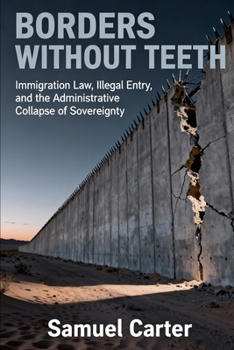
Borders Without Teeth: Immigration Law, Illegal Entry, and the Administrative Collapse of Sovereignty

Borders Without Teeth examines why modern states with extensive immigration laws and enforcement agencies nevertheless fail to control illegal entry and prolonged unauthorized presence. Rather than treating immigration as a moral, cultural, or partisan issue, this book analyzes it as a test of governance and administrative capacity.
Through comparative analysis of liberal, rules-based states, Samuel Carter shows how enforcement collapses not through the absence of law, but through institutional fragmentation, procedural delay, permanent exception regimes, and political incentives that reward symbolism over resolution. The result is a system where borders exist in name, authority is asserted rhetorically, and outcomes remain unresolved.
This book is not an argument for open borders or closed borders. It is an investigation into how sovereignty erodes quietly when law no longer concludes, enforcement becomes discretionary, and delay replaces decision. Immigration, Carter argues, is not the cause of this failure, but one of its clearest indicators.
Customer Reviews
ThriftBooks® and the ThriftBooks® logo are registered trademarks of Thrift Books Global, LLC
