


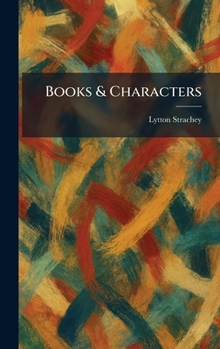
Books & Characters

"Books & Characters" is a refined collection of essays by the acclaimed biographer and critic Lytton Strachey, a central figure of the Bloomsbury Group. In this volume, Strachey applies his sharp intellect and elegant prose to a diverse array of literary and historical figures from both the French and English traditions. The work is divided into insightful portraits and critical analyses, spanning from the tragic grandeur of Racine and the biting wit of Voltaire to the complex sensibilities of Rousseau and Madame du Deffand.
Strachey's mastery of the biographical form is on full display as he explores the lives and works of poets like Thomas Lovell Beddoes and William Blake, as well as the intricate character of Lady Hester Stanhope. Through these sketches, he bridges the gap between the Enlightenment and the Romantic era, offering a sophisticated perspective on the evolution of literary style and human temperament. "Books & Characters" remains an essential read for those interested in the art of the essay and the delicate intersection of literature and biography. His prose, characterized by its clarity and ironical nuance, breathes life into the past, making this collection a timeless contribution to literary criticism.
This work has been selected by scholars as being culturally important, and is part of the knowledge base of civilization as we know it. This work was reproduced from the original artifact, and remains as true to the original work as possible. Therefore, you may see the original copyright references, library stamps (as most of these works have been housed in our most important libraries around the world), and other notations in the work.
This work is in the public domain in the United States of America, and possibly other nations. Within the United States, you may freely copy and distribute this work, as no entity (individual or corporate) has a copyright on the body of the work.
As a reproduction of a historical artifact, this work may contain missing or blurred pages, poor pictures, errant marks, etc. Scholars believe, and we concur, that this work is important enough to be preserved, reproduced, and made generally available to the public. We appreciate your support of the preservation process, and thank you for being an important part of keeping this knowledge alive and relevant.
Customer Reviews
ThriftBooks ® and the ThriftBooks ® logo are registered trademarks of Thrift Books Global, LLC
