


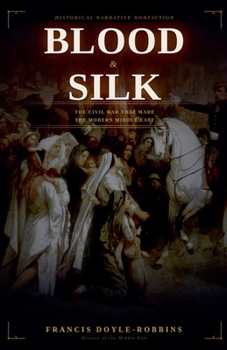
Blood and Silk: The Civil War That Made the Modern Middle East

In the summer of 1860, the mountains of Lebanon and the streets of Damascus became the site of one of the nineteenth century's most devastating communal catastrophes. What began as a peasant revolt against feudal landlords escalated into a civil war that killed between fifteen and twenty thousand people, obliterated ancient Christian communities, and forced the intervention of European great powers. Blood and Silk tells the full story of how it happened and what it made.
Drawing on diplomatic dispatches, survivor testimony, Ottoman administrative records, and the latest historical scholarship, Francis Doyle-Robbins traces the collision of three forces: the Ottoman Empire's modernising Tanzimat reforms, European imperial competition conducted through religious patronage, and the devastating social dislocations of the mountain's silk economy. The result was a catastrophe that was entirely modern in its causes and ancient in its horror.
The crisis produced two enduring legacies that continue to shape the Arab world today: the confessional power-sharing system that governs Lebanon still, and the intellectual tradition of the Arab Renaissance - the Nahda - that proposed a radically different vision of civic identity built on shared language rather than divided faith.
Authoritative, humane, and compulsively readable, Blood and Silk is essential history for anyone seeking to understand the modern Middle East.
Customer Reviews
ThriftBooks ® and the ThriftBooks ® logo are registered trademarks of Thrift Books Global, LLC
