
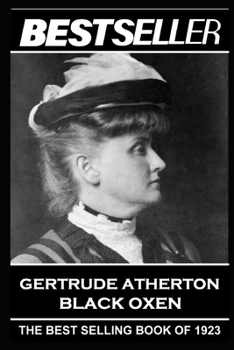
"Black Oxen" is a sophisticated social drama that explores the timeless quest for eternal youth within the glamorous circles of 1920s New York high society. The narrative follows Mary Zattiany, an aging socialite who undergoes a revolutionary medical procedure in Europe to restore her youth and beauty. Upon her return to the United States, her transformed appearance causes a sensation, leading to both fascination and intense scrutiny from the elite circles she once called home.
Gertrude Franklin Horn Atherton masterfully examines the psychological and societal consequences of scientific intervention, juxtaposing the era's fascination with modernity against the inevitability of time. As Mary navigates a complex romantic entanglement with a much younger man, the novel delves into themes of vanity, identity, and the evolving roles of women during the Jazz Age. "Black Oxen" serves as both a compelling character study and a sharp critique of social hypocrisy, capturing the tension between the desire for personal liberation and the weight of public reputation. This influential work remains a poignant reflection on the human condition and the ethical boundaries of medical advancement.
This work has been selected by scholars as being culturally important, and is part of the knowledge base of civilization as we know it. This work was reproduced from the original artifact, and remains as true to the original work as possible. Therefore, you may see the original copyright references, library stamps (as most of these works have been housed in our most important libraries around the world), and other notations in the work.
This work is in the public domain in the United States of America, and possibly other nations. Within the United States, you may freely copy and distribute this work, as no entity (individual or corporate) has a copyright on the body of the work.
As a reproduction of a historical artifact, this work may contain missing or blurred pages, poor pictures, errant marks, etc. Scholars believe, and we concur, that this work is important enough to be preserved, reproduced, and made generally available to the public. We appreciate your support of the preservation process, and thank you for being an important part of keeping this knowledge alive and relevant.

