


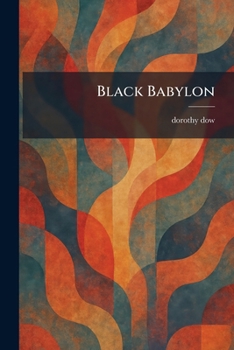
Black Babylon

"Black Babylon" is an evocative collection of poetry by Dorothy Dow that captures the vibrant and often turbulent spirit of the 1920s. Published at the height of the Jazz Age, this work explores the complexities of modern urban existence, the fleeting nature of romance, and the shifting social landscapes of the early twentieth century. Through sharp, rhythmic verse and a keen eye for detail, Dow portrays the allure and the disillusionment found within the metaphorical Babylon of the modern city.
The poems within this collection are characterized by their emotional depth and their reflection of a generation seeking meaning in a rapidly changing world. From the neon-lit streets to the private moments of longing and reflection, Dow's work resonates with the energy of her time while addressing timeless human experiences. As a significant voice in early twentieth-century American poetry, Dow contributes to the rich tapestry of modernist literature, offering readers a glimpse into the sophisticated and searching mind of a woman navigating the complexities of her era. "Black Babylon" stands as a compelling testament to the lyrical power and cultural resonance of jazz-age literature.
This work has been selected by scholars as being culturally important, and is part of the knowledge base of civilization as we know it. This work was reproduced from the original artifact, and remains as true to the original work as possible. Therefore, you may see the original copyright references, library stamps (as most of these works have been housed in our most important libraries around the world), and other notations in the work.
This work is in the public domain in the United States of America, and possibly other nations. Within the United States, you may freely copy and distribute this work, as no entity (individual or corporate) has a copyright on the body of the work.
As a reproduction of a historical artifact, this work may contain missing or blurred pages, poor pictures, errant marks, etc. Scholars believe, and we concur, that this work is important enough to be preserved, reproduced, and made generally available to the public. We appreciate your support of the preservation process, and thank you for being an important part of keeping this knowledge alive and relevant.
Related Subjects
PoetryCustomer Reviews
ThriftBooks ® and the ThriftBooks ® logo are registered trademarks of Thrift Books Global, LLC
