


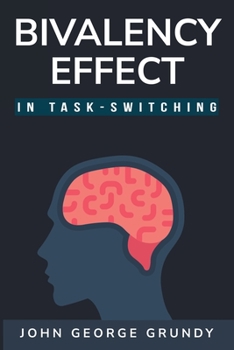
Bivalency Effect in Task-Switching
No Customer Reviews

During task-switching, if we occasionally encounter stimuli that cue more than
one task (i.e. bivalent stimuli), response slowing is observed on all univalent trials within
that block, even when no features overlap with the bivalent stimuli. This observation is
known as the bivalency effect. Here, I show that the bivalency effect reflects a form of
top-down cognitive control that is not easily explained by most current models of control
in the literature. The research presented within my thesis reveals that the bivalency effect
reflects an adjustment in cognitive control that is highly dependent on past experience
with response conflict.
Format:Paperback
Language:English
ISBN:1835207979
ISBN13:9781835207970
Release Date:September 2023
Publisher:Dutt Hb
Length:222 Pages
Weight:0.67 lbs.
Dimensions:0.5" x 6.0" x 9.0"
Customer Reviews
0 rating
Copyright © 2025 Thriftbooks.com
Terms of Use | Privacy Policy | Do Not Sell/Share My Personal Information | Cookie Policy | Cookie Preferences | Accessibility Statement
ThriftBooks ® and the ThriftBooks ® logo are registered trademarks of Thrift Books Global, LLC
ThriftBooks ® and the ThriftBooks ® logo are registered trademarks of Thrift Books Global, LLC
