


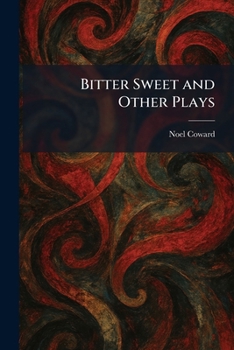
Bitter Sweet and Other Plays

Select Format
Select Condition 
Book Overview
"Bitter Sweet and Other Plays" showcases the sophisticated theatrical vision of the celebrated British playwright Noel Coward. At the heart of this collection is "Bitter Sweet," an operetta that masterfully blends romance and nostalgia, following the journey of a young woman who defies societal expectations to elope with her music teacher. Set against the vibrant backdrops of Victorian London and fin-de-si cle Vienna, the work explores themes of sacrifice, artistic passion, and the enduring nature of love.
This volume captures Coward's transition into a dominant force in 20th-century theater, demonstrating his unique ability to balance sharp wit with profound emotional resonance. In addition to the central operetta, the included plays highlight Coward's versatility as a dramatist and his keen ear for dialogue. From sweeping romantic melodies to the biting social commentary characteristic of his style, these works provide a window into the elegance and complexity of the interwar dramatic landscape. Readers and students of theater will find this collection an essential representation of Noel Coward's creative genius and his significant contribution to the musical and dramatic arts.
This work has been selected by scholars as being culturally important, and is part of the knowledge base of civilization as we know it. This work was reproduced from the original artifact, and remains as true to the original work as possible. Therefore, you may see the original copyright references, library stamps (as most of these works have been housed in our most important libraries around the world), and other notations in the work.
This work is in the public domain in the United States of America, and possibly other nations. Within the United States, you may freely copy and distribute this work, as no entity (individual or corporate) has a copyright on the body of the work.
As a reproduction of a historical artifact, this work may contain missing or blurred pages, poor pictures, errant marks, etc. Scholars believe, and we concur, that this work is important enough to be preserved, reproduced, and made generally available to the public. We appreciate your support of the preservation process, and thank you for being an important part of keeping this knowledge alive and relevant.
Customer Reviews
ThriftBooks ® and the ThriftBooks ® logo are registered trademarks of Thrift Books Global, LLC
