


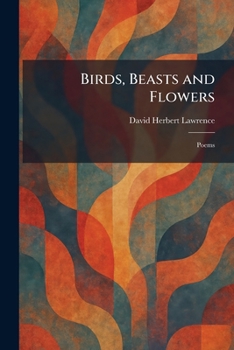
Birds, Beasts and Flowers: Poems

"Birds, Beasts and Flowers" is a landmark collection of poetry by D. H. Lawrence that showcases the author's intense and visceral connection to the natural world. Written during his extensive travels through Europe and North America, these poems depart from traditional constraints to embrace a more spontaneous and rhythmic free verse. The collection is meticulously organized into thematic sections-such as Fruits, Trees, Flowers, Creatures, and Reptiles-each exploring the raw, unbridled essence of life and the inherent power of the non-human world.
Lawrence delves into the "otherness" of his subjects, ranging from the pomegranate and the fig to the tortoise and the snake, seeking to understand the primitive forces that drive all living things. This work remains a cornerstone of early 20th-century modernist poetry, celebrated for its vivid imagery, emotional depth, and provocative exploration of vitality and spirit. "Birds, Beasts and Flowers" offers readers a profound meditation on the relationship between humanity and the environment, stripped of sentimentality and presented with Lawrence's signature passionate intensity. It is an essential volume for anyone interested in the development of modern verse and the literary exploration of the natural order.
This work has been selected by scholars as being culturally important, and is part of the knowledge base of civilization as we know it. This work was reproduced from the original artifact, and remains as true to the original work as possible. Therefore, you may see the original copyright references, library stamps (as most of these works have been housed in our most important libraries around the world), and other notations in the work.
This work is in the public domain in the United States of America, and possibly other nations. Within the United States, you may freely copy and distribute this work, as no entity (individual or corporate) has a copyright on the body of the work.
As a reproduction of a historical artifact, this work may contain missing or blurred pages, poor pictures, errant marks, etc. Scholars believe, and we concur, that this work is important enough to be preserved, reproduced, and made generally available to the public. We appreciate your support of the preservation process, and thank you for being an important part of keeping this knowledge alive and relevant.
Related Subjects
PoetryCustomer Reviews
ThriftBooks ® and the ThriftBooks ® logo are registered trademarks of Thrift Books Global, LLC
