


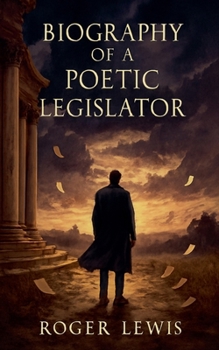
Biography of A Poetic Legislator

In this unprecedented fusion of memoir, poetry collection, and economic manifesto, Roger Lewis traces an intellectual odyssey from the coal mines of South Wales to the frontiers of digital-age resistance. Drawing inspiration from Shelley's vision of poets as "unacknowledged legislators," Lewis demonstrates how verse can serve as economic analysis and political action.
Eight Books of Transformation:
Book I: Origins - Foster Lewis's "The Miner's Tale" provides the foundation, where cooperative traditions forge an understanding that real wealth comes from human effort, not financial abstraction.
Book II: Awakening - "The Strawberry Conspiracy" reveals how natural abundance is transformed into artificial scarcity through financial manipulation.
Book III: Education - "The Conquest of Dough" systematically exposes how money creation serves financial elites, offering technical understanding of fractional reserve banking and monetary reform alternatives.
Book IV: Connections - James Burke's systems thinking illuminates how technology, money, and power interconnect, revealing unexpected leverage points for democratic change.
Book V: Mentorship - Encounters with David Malone (Golem XIV) and fellow truth-seekers demonstrate how intellectual community transforms solitary critique into collaborative construction of alternatives.
Book VI: Housing Crisis - "Ten Steps to Affordable Housing" applies theory to practice, connecting monetary reform to immediate human needs and social justice.
Book VII: Digital Age - "The Conquest of AI" confronts whether artificial intelligence will concentrate power further or enable new forms of democratic participation.
Book VIII: Synthesis - "Circle of Blame Chronicles" integrates all insights into a comprehensive worldview based on mutual aid, cooperative economics, and breaking cycles of oppression.
The Poetry Legislators Companion Edition includes original works like "The Miner's Lamp," "Usury Hell's Fuel," and "The Algorithm's Lament," alongside influential selections from Blake, Morris, Shelley, and Pound.
Key Themes:
Monetary reform and the critique of usuryArtificial scarcity versus natural abundanceHousing justice and community land trustsAI ethics and technological democracyMutual aid and cooperative alternativesThe intersection of poetry and economicsLewis channels William Blake's visionary imagination, William Morris's practical socialism, and Ezra Pound's economic analysis (purged of toxic elements), while adding contemporary insights on digital surveillance, algorithmic tyranny, and the financialization of daily life.
From Socratic dialogues between Heraclitus and Parmenides on economic reality, to Queen Mab addressing Timon's digital misanthropy-this work refuses the boundaries between genres, disciplines, and centuries.
Includes extensive appendices: complete bibliography, chronological blog index, thematic cross-references, glossary of economic and poetic terms, discussion questions for study groups, and the complete "Circle of Blame" cycle.
For readers seeking to understand how financial systems shape consciousness, how poetry can serve as economic analysis, and how mutual aid offers practical alternatives to exploitation-this book provides both diagnosis and prescription, critique and construction, despair and hope.
Customer Reviews
ThriftBooks® and the ThriftBooks® logo are registered trademarks of Thrift Books Global, LLC
