


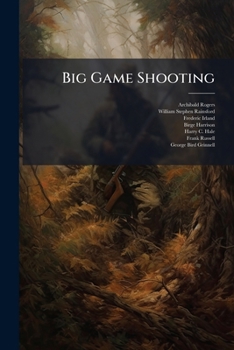
Big Game Shooting

"Big Game Shooting" is a captivating collection of hunting narratives from celebrated sportsmen of the late 19th and early 20th centuries. This anthology brings together vivid accounts of pursuing large game across diverse landscapes. Readers will be transported to the heart of the wilderness, experiencing thrilling hunts and gaining insights into the strategies and skills required for successful big game hunting.
Featuring contributions from Archibald Rogers, William Stephen Rainsford, Frederic Irland, Birge Harrison, Harry C. Hale, Frank Russell, and George Bird Grinnell, this volume offers a diverse range of perspectives and hunting experiences. Each narrative provides a unique glimpse into the challenges and rewards of hunting various big game species, offering both excitement and valuable knowledge for aspiring hunters and wildlife enthusiasts alike.
A timeless addition to any sportsman's library, "Big Game Shooting" celebrates the enduring allure of the hunt and the profound connection between humans and the natural world.
This work has been selected by scholars as being culturally important, and is part of the knowledge base of civilization as we know it. This work was reproduced from the original artifact, and remains as true to the original work as possible. Therefore, you will see the original copyright references, library stamps (as most of these works have been housed in our most important libraries around the world), and other notations in the work.
This work is in the public domain in the United States of America, and possibly other nations. Within the United States, you may freely copy and distribute this work, as no entity (individual or corporate) has a copyright on the body of the work.
As a reproduction of a historical artifact, this work may contain missing or blurred pages, poor pictures, errant marks, etc. Scholars believe, and we concur, that this work is important enough to be preserved, reproduced, and made generally available to the public. We appreciate your support of the preservation process, and thank you for being an important part of keeping this knowledge alive and relevant.
Customer Reviews
ThriftBooks® and the ThriftBooks® logo are registered trademarks of Thrift Books Global, LLC
