


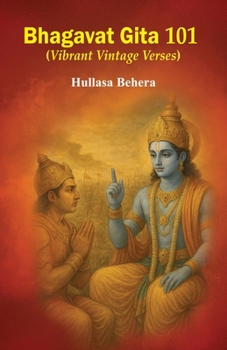
Bhagavat Gita 101: Vibrant Vintage Verses

What exactly is Bhagavat Gita? Bhagawan Krishna delivered a long and learned speech to Arjuna, the ace, incomparable archer of the day, who, all of a sudden, shuddered to think that he would kill his kith and kin, elders and superiors for the superfluous gain of a lost kingdom. Krishna cleared his confusion, dispelled his doubts and instilled in him the primacy, priority, pivotality and philosophy of "present assignment" in particular and "duty" in general. Arjuna asked scores of questions, raised reasonable riddles and Krishna answered them intelligently, eminently, eloquently, elegantly, in an equanimous, tranquil manner. As such, Gita is the dialogue between Krishna and Arjuna. Krishna, some say, took 45 minutes to tell Gita. While 574 slokas are uttered by Krishna, Arjuna spoke 84 verses. That Gita is great is not said by Krishna, although He has said in chapter X, verse 37 that Vyasa, the Gita composer, is the primus inter pares sage.
Gita has been greatly glorified by a great many sages, scholars, critics, activists, reformers, researchers, teachers, preachers-Indian as well as foreign-from Shankaracharya, Ramanuja, Gnaneshwar, Aurobindo, Vivekananda to J K Krishnamurthy, Anni Besant, Max Muller, Edwin Arnold, S Radhakrishnan etc. It was Krishna's lullaby to Arjuna, not induce the latter to sleep but to incite, excite him to fight, to the call of duty, to awaken him to the importance, inevitability, inescapability of duty, one's duty. It chimes with popular Sanskrit moral,
Akrtuty naiva karttavyam pranatyagoapisamsisthe
Na cha krutyam parityajyameshah dharmah santanah.
Customer Reviews
ThriftBooks ® and the ThriftBooks ® logo are registered trademarks of Thrift Books Global, LLC
