


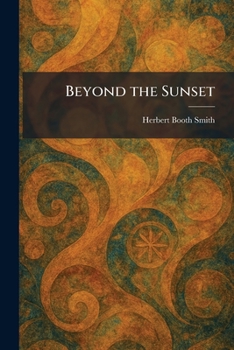
Beyond the Sunset

"Beyond the Sunset" is a profound and comforting exploration of the Christian perspective on immortality and the afterlife. Written by Herbert Booth Smith, this work delves into the timeless questions that arise as one contemplates the end of earthly life and the promise of what lies beyond. Smith provides a thoughtful examination of the "sunset" of existence, offering hope and reassurance to those seeking to understand the transition from this world to the next.
Drawing upon theological insights and spiritual wisdom, the book addresses themes of grief, faith, and the enduring nature of the soul. It serves as both a reflective meditation on eschatology and a practical guide for those searching for peace in the face of mortality. By focusing on the promise of eternal life, Smith helps readers navigate the complexities of loss while emphasizing the light that awaits on the other side of life's horizon.
This classic religious text remains a significant resource for individuals looking for spiritual solace and a deeper understanding of the Christian hope. Through its eloquent prose and heartfelt insights, "Beyond the Sunset" continues to resonate with anyone exploring the mysteries of life, death, and the eternal journey of the spirit.
This work has been selected by scholars as being culturally important, and is part of the knowledge base of civilization as we know it. This work was reproduced from the original artifact, and remains as true to the original work as possible. Therefore, you may see the original copyright references, library stamps (as most of these works have been housed in our most important libraries around the world), and other notations in the work.
This work is in the public domain in the United States of America, and possibly other nations. Within the United States, you may freely copy and distribute this work, as no entity (individual or corporate) has a copyright on the body of the work.
As a reproduction of a historical artifact, this work may contain missing or blurred pages, poor pictures, errant marks, etc. Scholars believe, and we concur, that this work is important enough to be preserved, reproduced, and made generally available to the public. We appreciate your support of the preservation process, and thank you for being an important part of keeping this knowledge alive and relevant.
Customer Reviews
ThriftBooks ® and the ThriftBooks ® logo are registered trademarks of Thrift Books Global, LLC
