


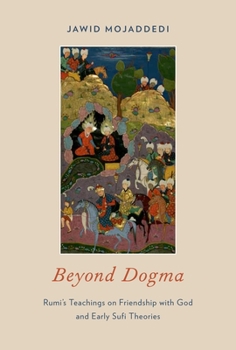
Beyond Dogma: Rumi's Teachings on Friendship with God and Early Sufi Theories

Despite Rumi's (d. 1273) recent emergence as a best-selling poet in the English-speaking world, fundamental questions about his teachings, such as the relationship of his Sufi mysticism to the wider Islamic religion, remain contested. In this groundbreaking study, Jawid Mojaddedi reaches to the heart of the matter by examining Rumi's teachings on walaya (Friendship with God) in light of earlier discourse in the wider Sufi tradition and juridico-theological Islam. Walaya is not only central to Rumi's teachings, but forms the basis for the celebration of intimacy, communication with the Divine, and transcendence of conventional religiosity in his poetry. And yet walaya is the aspect of Sufism which has proven the most difficult to reconcile with juridico-theological Islam.
Customer Reviews
ThriftBooks® and the ThriftBooks® logo are registered trademarks of Thrift Books Global, LLC
