


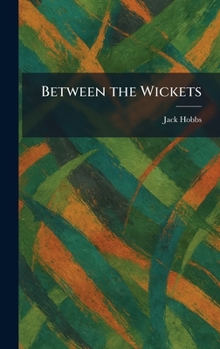
Between the Wickets

"Between the Wickets" is an insightful and personal look into the world of cricket through the eyes of one of its most legendary figures, Jack Hobbs. Known as "The Master," Hobbs provides a compelling narrative that blends his personal experiences on the field with a deep analysis of the sport's evolution during the early 20th century. The work explores the intricacies of batting technique, the strategic nuances of the game, and the spirit of competition that defines professional cricket.
Throughout the book, Hobbs reflects on his illustrious career, offering readers a firsthand account of some of the most memorable matches and eras in the history of the sport, including his time representing England and Surrey. Beyond the statistics and scores, the text emphasizes the values of sportsmanship and dedication. "Between the Wickets" serves as both a practical guide for enthusiasts and a historical record of a golden age in cricket. It captures the essence of the game from the perspective of a man who dominated the crease, making it an essential read for anyone interested in the heritage and heart of cricket.
This work has been selected by scholars as being culturally important, and is part of the knowledge base of civilization as we know it. This work was reproduced from the original artifact, and remains as true to the original work as possible. Therefore, you may see the original copyright references, library stamps (as most of these works have been housed in our most important libraries around the world), and other notations in the work.
This work is in the public domain in the United States of America, and possibly other nations. Within the United States, you may freely copy and distribute this work, as no entity (individual or corporate) has a copyright on the body of the work.
As a reproduction of a historical artifact, this work may contain missing or blurred pages, poor pictures, errant marks, etc. Scholars believe, and we concur, that this work is important enough to be preserved, reproduced, and made generally available to the public. We appreciate your support of the preservation process, and thank you for being an important part of keeping this knowledge alive and relevant.
Customer Reviews
ThriftBooks ® and the ThriftBooks ® logo are registered trademarks of Thrift Books Global, LLC
