



Select Format
Select Condition 
Book Overview
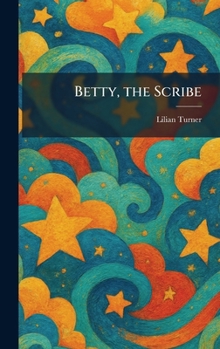
"Betty, the Scribe" is a spirited and heartwarming tale of female ambition and family devotion set in the early twentieth century. The narrative follows the journey of Betty, a talented and determined young woman who dreams of carving out a career as a writer. Following the death of her mother, Betty is thrust into the demanding role of household manager, tasked with caring for her father and her lively siblings while struggling to keep her own literary dreams alive.
Lilian Turner masterfully explores the tension between domestic duty and the yearning for artistic expression. As the titular scribe, Betty documents the trials and triumphs of her daily life, navigating the complexities of poverty, family dynamics, and the pursuit of professional success. This classic work of juvenile fiction offers a vivid portrayal of Australian domestic life, emphasizing the themes of resilience, sacrifice, and the importance of self-belief. "Betty, the Scribe" remains a significant contribution to the genre of coming-of-age literature, providing a relatable and enduring protagonist whose wit and perseverance continue to resonate with readers interested in the historical evolution of the "New Girl" in literature.
This work has been selected by scholars as being culturally important, and is part of the knowledge base of civilization as we know it. This work was reproduced from the original artifact, and remains as true to the original work as possible. Therefore, you may see the original copyright references, library stamps (as most of these works have been housed in our most important libraries around the world), and other notations in the work.
This work is in the public domain in the United States of America, and possibly other nations. Within the United States, you may freely copy and distribute this work, as no entity (individual or corporate) has a copyright on the body of the work.
As a reproduction of a historical artifact, this work may contain missing or blurred pages, poor pictures, errant marks, etc. Scholars believe, and we concur, that this work is important enough to be preserved, reproduced, and made generally available to the public. We appreciate your support of the preservation process, and thank you for being an important part of keeping this knowledge alive and relevant.
Customer Reviews
ThriftBooks ® and the ThriftBooks ® logo are registered trademarks of Thrift Books Global, LLC
