


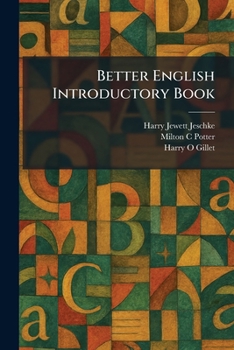
Better English Introductory Book

Select Format
Select Condition 
Book Overview
"Better English Introductory Book" is a comprehensive foundational guide designed to cultivate essential communication skills in young learners. This work serves as an accessible entry point into the mechanics of the English language, focusing on clarity, correctness, and the joy of expression. By blending structural grammar with practical application, the text aims to develop both oral and written proficiency through engaging exercises and thoughtful instruction.
The book covers a wide array of fundamental topics, including sentence structure, vocabulary building, and the principles of effective composition. Its pedagogical approach emphasizes the importance of habit formation in speech and writing, encouraging students to take pride in their linguistic abilities. Through guided lessons on storytelling, letter writing, and everyday conversation, the authors provide a robust framework for mastering the nuances of the language. This work remains a valuable resource for those interested in the history of educational methods and the timeless principles of clear communication. Whether used for self-study or as a reference for classic instruction, "Better English Introductory Book" stands as a testament to the enduring importance of a strong linguistic foundation.
This work has been selected by scholars as being culturally important, and is part of the knowledge base of civilization as we know it. This work was reproduced from the original artifact, and remains as true to the original work as possible. Therefore, you may see the original copyright references, library stamps (as most of these works have been housed in our most important libraries around the world), and other notations in the work.
This work is in the public domain in the United States of America, and possibly other nations. Within the United States, you may freely copy and distribute this work, as no entity (individual or corporate) has a copyright on the body of the work.
As a reproduction of a historical artifact, this work may contain missing or blurred pages, poor pictures, errant marks, etc. Scholars believe, and we concur, that this work is important enough to be preserved, reproduced, and made generally available to the public. We appreciate your support of the preservation process, and thank you for being an important part of keeping this knowledge alive and relevant.
Related Subjects
Language ArtsCustomer Reviews
ThriftBooks ® and the ThriftBooks ® logo are registered trademarks of Thrift Books Global, LLC
