


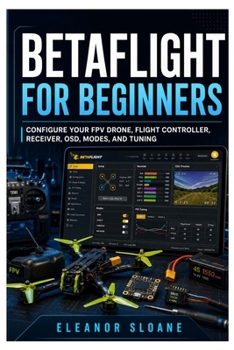
Betaflight for Beginners: Configure Your FPV Drone, Flight Controller, Receiver, OSD, Modes, and Tuning

Betaflight can feel overwhelming when you first open the application. One screen shows sensor readings, receiver channels, motor controls, battery limits, flight modes, tuning values, and unfamiliar abbreviations. Changing the wrong setting can disable a receiver, remove the on-screen display, create motor problems, or cause the quadcopter to flip immediately after takeoff.
Betaflight for Beginners turns those settings into a clear, practical configuration process.
Written for new FPV pilots, first-time builders, prebuilt-drone owners, and users replacing damaged electronics, this guide explains what each major Betaflight function does, when it should be changed, and how to verify the result safely.
You will begin by understanding how the transmitter, receiver, flight controller, sensors, electronic speed controllers, motors, and propellers work together. From there, you will progress through hardware planning, firmware backups, receiver setup, motor testing, OSD configuration, failsafe, GPS Rescue, rates, tuning, Blackbox analysis, and preparation for the first flight.
Inside this hands-on guide, you will learn how to:
Understand how Betaflight converts stick movements into motor responsesIdentify the flight controller, firmware version, target, board revision, and installed sensorsRead flight-controller pinouts and wiring diagrams correctlyVerify battery-voltage, 5-volt, 9-volt, 10-volt, and 3.3-volt connectionsPlan UART assignments before connecting the receiver, GPS, video system, or other peripheralsWire transmit and receive lines in the correct directionConfigure ExpressLRS, Crossfire, SBUS, IBUS, and other supported receiver systemsPlan analog and digital FPV video connectionsUse a smoke stopper during the first battery connection after wiring changesConnect through the Betaflight App and confirm that the board is communicatingInspect a prebuilt aircraft before making unnecessary firmware changesCreate dependable application and command-line backupsSelect the correct firmware target and recover from a failed flashCheck board orientation and correct a rotated flight controllerConfigure the mixer, craft type, system settings, and arming conditionsThe book includes practical projects for creating a complete wiring plan, securing a prebuilt drone before updating, building a UART assignment table, testing receiver channels and switches, verifying the motor system, calibrating battery consumption, designing a clean OSD, conducting a controlled failsafe test, comparing rate profiles, validating a tuning preset, diagnosing vibration from Blackbox data, and creating a command-line recovery file.
The final capstone takes you through the complete process-from a blank configuration to a propeller-free bench test and first safe flight.
Appendices provide electrical, receiver, motor, failsafe, maiden-flight, preflight, and post-crash checklists, along with a CLI reference, troubleshooting matrix, hardware inventory, UART worksheet, mode plan, motor diagram, battery record, tuning record, firmware-update log, and backup register.
Whether you are configuring a new quadcopter, setting up a prebuilt model, replacing a flight controller, troubleshooting a receiver, or preparing to understand tuning for the first time, this guide gives you one organised workflow from hardware identification to flight readiness.
Inspect first. Back up everything. Change one setting at a time. Test every result before installing the propellers.
Customer Reviews
ThriftBooks ® and the ThriftBooks ® logo are registered trademarks of Thrift Books Global, LLC
