


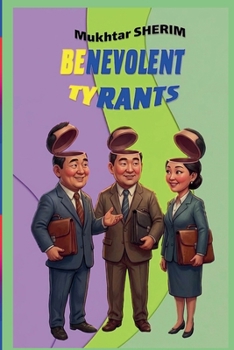
Benevolent Tyrants

Introduction
Benevolent Tyrants is a bold and imaginative satirical novel by Mukhtar Sherim that blends political satire, historical figures, absurd comedy, and science fiction into an unusual story about power, history, guilt, and humanity. The novel begins with the extraordinary invention of Nurasyl Ospanuly, a Kazakh scientist who creates an "Underunderground Drone" capable of travelling beneath the earth and bringing the dead back to life. His experiments unexpectedly resurrect some of history's most notorious rulers, including Genghis Khan, Joseph Stalin, Adolf Hitler, and Napoleon.
Instead of presenting these figures as distant names from history, the novel places them in the modern world, where they encounter presidents, bureaucrats, journalists, ordinary citizens, criminals, and modern technology. Their encounters produce a continuous stream of comic and absurd situations, while also forcing the resurrected dictators to confront the consequences of their past actions. Stalin, for example, is confronted with the suffering associated with his rule, while Genghis Khan reflects on the destruction caused by his conquests.
Through exaggerated humour and impossible situations, the novel exposes the absurdities of political power, bureaucracy, corruption, war, propaganda, and human ambition. Beneath its laughter lies a serious question: can those who once wielded enormous power understand, regret, or change after confronting the human consequences of their actions? Benevolent Tyrants ultimately uses comedy to invite readers to look at history, authority, and humanity from an unexpected perspective.
Customer Reviews
ThriftBooks ® and the ThriftBooks ® logo are registered trademarks of Thrift Books Global, LLC
