


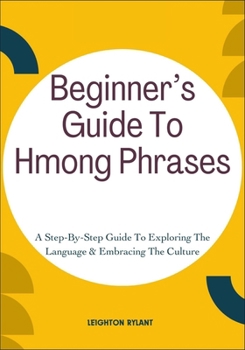
Beginner's Guide To Hmong Phrases: A Step-By-Step Guide To Exploring The Language & Embracing The Culture
No Customer Reviews

Originating in the mountainous regions of China, Vietnam, Laos, and Thailand, the Hmong people are the primary speakers of the Hmong language, which is a branch of the Hmong-Mien language family. The Hmong people have maintained their language and culture even after centuries of migration, and you can hear them speaking here in the US, France, and Australia. As a tonal language, Hmong allows speakers to alter the meaning of a word simply by changing its pitch or tone. Its grammar is straightforward; there is no use of tense or number inflection. Sentences often follow the form of subject-verb-object, which highlights the significance of word order.
Hmong is a language with two major varieties: White Hmong (or Hmoob Dawb) and Green Hmong (or Hmoob Ntsuab). Even though they sound similar to one another, the pronunciation and vocabulary of these dialects are very different. The Hmong Romanized Alphabet (HRA), created in the 1950s by missionaries, is the current system of writing the Hmong language using the Roman alphabet. The "Pahawh Hmong" script, created in the 1950s by a scholar of the Hmong language, was one of several that existed prior to this. Hmong songs, stories, and ceremonies all make use of the language, which holds great cultural value for the Hmong people. Hmong culture and identity are deeply rooted in the language, which is passed down from one generation to the next, even if the younger generation is more open to learning and using other languages. The ongoing use of Hmong is vital for the preservation of Hmong heritage, as it is a distinct language with a rich cultural history.
Hmong is a language with two major varieties: White Hmong (or Hmoob Dawb) and Green Hmong (or Hmoob Ntsuab). Even though they sound similar to one another, the pronunciation and vocabulary of these dialects are very different. The Hmong Romanized Alphabet (HRA), created in the 1950s by missionaries, is the current system of writing the Hmong language using the Roman alphabet. The "Pahawh Hmong" script, created in the 1950s by a scholar of the Hmong language, was one of several that existed prior to this. Hmong songs, stories, and ceremonies all make use of the language, which holds great cultural value for the Hmong people. Hmong culture and identity are deeply rooted in the language, which is passed down from one generation to the next, even if the younger generation is more open to learning and using other languages. The ongoing use of Hmong is vital for the preservation of Hmong heritage, as it is a distinct language with a rich cultural history.
Format:Paperback
Language:English
ISBN:B0FLVS678G
ISBN13:9798296979476
Release Date:August 2025
Publisher:Independently Published
Length:128 Pages
Weight:0.52 lbs.
Dimensions:0.3" x 7.0" x 10.0"
Related Subjects
TravelCustomer Reviews
0 rating
Copyright © 2026 Thriftbooks.com
Terms of Use | Privacy Policy | Do Not Sell/Share My Personal Information | Cookie Policy | Cookie Preferences | Accessibility Statement
ThriftBooks ® and the ThriftBooks ® logo are registered trademarks of Thrift Books Global, LLC
ThriftBooks ® and the ThriftBooks ® logo are registered trademarks of Thrift Books Global, LLC
