


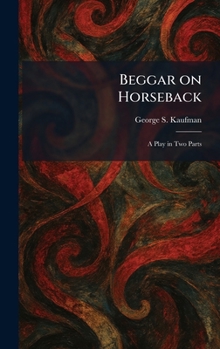
Beggar on Horseback: A Play in Two Parts

"Beggar on Horseback" is a landmark satirical play by George S. Kaufman that masterfully blends expressionist techniques with sharp social commentary. The narrative centers on Neil McRae, a gifted but impoverished composer who finds himself at a crossroads: should he pursue his artistic passion or marry into a wealthy, soul-crushing business family to secure his financial future?
The play is most famous for its elaborate dream sequence, which transforms the mundane pressures of Neil's life into a surreal, nightmarish spectacle of industrial efficiency and social absurdity. Through its innovative structure and biting wit, "Beggar on Horseback" critiques the early 20th-century obsession with commercialism and the stifling effects of corporate conformity on the creative spirit.
Rich with humor and avant-garde staging elements, this two-part play remains a significant work of American drama. It offers a poignant exploration of the eternal conflict between artistic integrity and the allure of material security, making it a timeless piece for students of theater and fans of classic satire.
This work has been selected by scholars as being culturally important, and is part of the knowledge base of civilization as we know it. This work was reproduced from the original artifact, and remains as true to the original work as possible. Therefore, you may see the original copyright references, library stamps (as most of these works have been housed in our most important libraries around the world), and other notations in the work.
This work is in the public domain in the United States of America, and possibly other nations. Within the United States, you may freely copy and distribute this work, as no entity (individual or corporate) has a copyright on the body of the work.
As a reproduction of a historical artifact, this work may contain missing or blurred pages, poor pictures, errant marks, etc. Scholars believe, and we concur, that this work is important enough to be preserved, reproduced, and made generally available to the public. We appreciate your support of the preservation process, and thank you for being an important part of keeping this knowledge alive and relevant.
Related Subjects
DramaCustomer Reviews
ThriftBooks ® and the ThriftBooks ® logo are registered trademarks of Thrift Books Global, LLC
