
Skip to content
Scan a barcode
Scan
Paperback Beethoven Hero Book

ISBN: 0691050589

ISBN13: 9780691050584

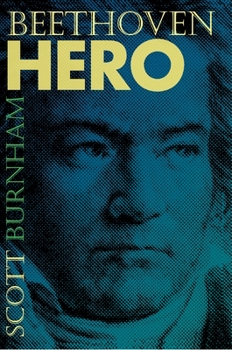
Beethoven Hero

Select Format

Select Condition ThriftBooks Help Icon

Recommended

Format: Paperback

Condition: New

$46.39
Save $0.61!
List Price $47.00
Ships within 2-3 days
Save to List

Book Overview

Bringing together reception history, music analysis and criticism, the history of music theory, and the philosophy of music, Beethoven Hero explores the nature and persistence of Beethoven's heroic style. What have we come to value in this music, asks Scott Burnham, and why do generations of critics and analysts hear it in much the same way? Specifically, what is it that fosters the intensity of listener engagement with the heroic style, the often overwhelming sense of identification with its musical process? Starting with the story of heroic quest heard time and again in the first movement of the Eroica Symphony, Burnham suggests that Beethoven's music matters profoundly to its listeners because it projects an empowering sense of self, destiny, and freedom, while modeling ironic self-consciousness.

In addition to thus identifying Beethoven's music as an overarching expression of values central to the age of Goethe and Hegel, the author describes and then critiques the process by which the musical values of the heroic style quickly became the controlling model of compositional logic in Western music criticism and analysis. Apart from its importance for students of Beethoven, this book will appeal to those interested in canon formation in the arts and in music as a cultural, ethical, and emotional force--and to anyone concerned with what we want from music and what music does for us.

Customer Reviews

1 rating

How to Love and Overcome Beethoven's Heroic Music

In "Beethoven Hero" (1995), Scott Burnham, Professor of Music at Princeton University and a leading Beethoven scholar, offers two complemetary approaches to the music of Beethoven's heroic period. As Professor Burham reminds us, this music consists of a relatively small body of work from Beethoven's middle period, primarily the third and fifth symphonies, the "Emperor" concerto, the "Waldstein" and "Appassionata" piano sonatas, and several overtures. Yet, for many listeners, these works have come to be regarded as the greatest achievement of Western music and, more importantly, as the paradigms by which other music is heard and judged. Much of Professor Burnham's study is devoted to explaining the nature of Beethoven's heroic music and the reasons for its power and appeal. He finds that this music has been found by virtually all listeners to speak of the human condition in terms of suffering and struggle and the overcoming of suffering through will, persistence, and self-actualization. Thus, Professor Burnham offers an analysis of the first movement of the Eroica symphony which shows that listeners who hear this music in terms of a programatic, extra-musical interpretation (the struggles and ultimate victory of a hero) describe the work in ways essentially similar to those listeners who use more formalistic, strictly musical descriptions. (in terms, for example, of the long, ambiguous exposition, the new thematic material in the development, the horn call that begins the recaptitulation, the expansive coda). Professor Burnham then follows this discussion with his own analysis of the first movement of the fifth symphony which tries to show in musical terms how this work retains its hold over the imagination of many people. Professor Burnham then discusses how Beethoven's heroic style became paradigmatic for all music. There is a difficult but fascinating discussion of the work of four 19th and 20th century musical theorists, A.B. Marx, Hugo Riemann, Heinrich Schenker, and Rudolph Reti, and their use of Beethoven. Broadly speaking, these theorists took Beethoven as their model, tried to determine in their various ways the structural, thematic, and harmonic patterns they found in Beethoven's music, and then made these patterns normative for considering all music. Their work, for Burnham, shows both the enormous influence of Beethoven and how his work became paradigmatic through what is essentially circular reasoning. Following this musical analysis, Professor Burnham changes his focus and finds that Beethoven's music captures the worldview of his time in Germany which he finds rooted in Goethe, with its focus on the self and on concepts of change and becoming, and Hegel, with its focus on consciousness and transcendence. Hegelian idealism has, for the most part, lost its philosophical appeal; but its goals and values remain moving in Beethoven's music in a way that bare philosophy could never realize. This discussion and the discussion
Copyright © 2026 Thriftbooks.com Terms of Use | Privacy Policy | Do Not Sell/Share My Personal Information | Cookie Policy | Cookie Preferences | Accessibility Statement
ThriftBooks® and the ThriftBooks® logo are registered trademarks of Thrift Books Global, LLC

GoDaddy Verified and Secured