
Skip to content
Scan a barcode
Scan
Paperback Beauty in Arabic Culture Book

ISBN: 1558761993

ISBN13: 9781558761995

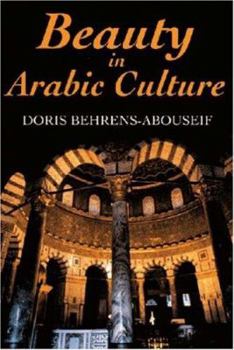
Beauty in Arabic Culture

Select Format

Select Condition ThriftBooks Help Icon

Recommended

Format: Paperback

Condition: New

$24.95
50 Available
Ships within 2-3 days

Book Overview

Arabic Islamic thought allowed the development of autonomous norms of beauty that were independent of moral or religious criteria. The artistic work was viewed separately from the divine scheme and was free of metaphysical associations.

Beauty, however, had a significant place in religious thought. The Arab-Muslim tradition views the beauty of the universe, emphasized in the Koran, and the literary superiority of the Koranic text itself as compelling evidence for the divine hand. Under the influence of Greek thought, philosophers, sufis, and theologians dealt with the beauty-love relationship as the basic factor in the motion of the universe. Sufi worship is based on passion for God's beauty, which is manifest in the human image.

Having created a huge empire on the territory of the great ancient civilizations, the Arab conquerors saw themselves as the heirs of these cultures and acted accordingly as great patrons of the arts. The sponsorship of the arts, which bestowed a brilliance on the monarchs, was viewed as beneficial to the image of the Muslim community when facing its Christian antagonists.

Poetry, calligraphy, music, architecture, and the decorative arts flourished in this system of sponsorship. It was Muslim orthodoxy itself, based on the Prophet's distance to the poets, that let art go its profane way. Sufi poets adopted the vocabulary of erotic and bacchic poetry to address God, and craftsmen applied the same architectural and decorative idiom to both religious and profane monuments. In music, virtuosity was associated with diabolic rather than divine inspiration. Music, poetry, and wine belonged to the same hedonistic experience.

Doris Behrens-Abouseif's book provides a panorama of the concepts of beauty in classical and post-classical Arabic culture through the 15th century, drawing on Arabic texts from philosophy, theology, mysticism, poetry, and literary criticism as well as historiographic sources and tales from the Thousand and One Nights. Behrens-Abouseif elucidates the ways in which beauty was measured by the degree of pleasure it elicited in the recipient, an attitude that anticipates modernity in both East and West.

Customer Reviews

2 ratings

various reviews

"Although beauty, in the premodern Arab world, was enjoyed and promoted almost everywhere and at all times, Islam does not possess a general theory on aesthetics (i.e., art and beauty) or a systematic theory of the arts. The author therefore had to search for her evidence in written statements from a wide variety of sources, such as the Qur'an, legal, religious and Sufi texts, chronicles, biographies, belle-lettres, literary criticism and scientific, geographic and philosophical literature. The result is a compendium of references to beauty in chapters on the Religious Approach, Secular Beauty and Love, Music and Belle-Lettres, and the Visual Arts. "This approach is informative and provocative. For the generalist, it provides a comparative material for an understanding of the early Arab cultural context. For the specialist, it raises questions of sponsorship and purpose. "In her look at beauty in Arab culture, Doris Behrens-Abouseif builds on the work and insights of previous scholars of Islamic culture and art. By attempting to develop an explanation or theory from widely scattered sources, however, she broadens and generalizes that inquiry. As such, she has added novel insights to a field of inquiry which is still relatively new, and which is a welcome contribution." - Middle East Journal "A succint synthesis of the Arab experience." --Journal of Palestine Studies " An excellent introduction to a rich yet under-researched topic, offering a panoramic view of the theme of beauty in the pre-modern Arab-Islamic tradition. Consulting a wide range of original Arabic sources in philosophy, theology, mysticism, history, poetry, and literature, she traces the articulation of the theme in religious and secular Islamic thought. Her concise and comprehensible style makes the text accessible to the general reader, while being particularly useful to both students and scholars of Islamic art and architecture, Arabic literature, and Islamic aesthetics... --Religious Studies Review 26, no. 4 (October 2000)

Unique & comprehensive approach of the Arab Culture

Although read only in German Language I consider the book as one of the best I have ever read about the Arab culture. The comprehensive approach and the definition of beauty in arab culture is fascinating.
Copyright © 2025 Thriftbooks.com Terms of Use | Privacy Policy | Do Not Sell/Share My Personal Information | Cookie Policy | Cookie Preferences | Accessibility Statement
ThriftBooks ® and the ThriftBooks ® logo are registered trademarks of Thrift Books Global, LLC

GoDaddy Verified and Secured