


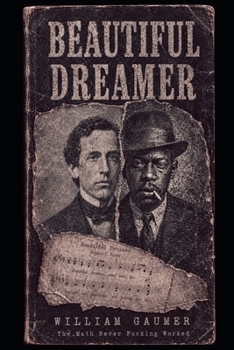
Beautiful Dreamer: The math never f%$king worked.

It started with a broken phonograph. William Gaumer found a 1911 Edison Amberola, fixed it by hand, and played a voice recorded in 1910 - a man singing Casey Jones into a horn, getting paid once while the company collected forever. That thread pulled him back through 150 years of the same story told with different technology and different names and the same result.
Beautiful Dreamer: The Math Never Fucking Worked traces the architecture of artistic exploitation from the medieval church - the first music industry - through the patronage system, the sheet music era, the phonograph, the recording industry, the corporate label system, and the streaming platforms of today. The mechanisms change. The math doesn't.
Stephen Foster wrote Oh Susanna and received $100. Two dozen publishers printed it without paying him and collectively earned tens of thousands of dollars. He died in a Bowery boarding house in 1864 with 38 cents in his pocket and a scrap of paper reading dear friends and gentle hearts - while his songs played in the concert hall two blocks north.
The book moves through Robert Johnson at the crossroads, Lead Belly's catalogs absorbed into the mainstream, Jimmie Rodgers recording on a cot between takes, TLC going bankrupt with a platinum record, Bob Marley signing away his publishing at 23, Syd Barrett's 21 years of silence after Pink Floyd kept his songs, Townes Van Zandt living in a shack while his catalog made other people famous, and a sixteen-year-old with a ring light and 40,000 views wondering why the payment notification never came.
This is not a polemic. It is a precise and deeply reported account of how the framework governing the exchange between artist and institution was written - and by whom - and what that has meant for the people who filled every era of American music with its sound.
The arrangement needs you not to know. It has always needed that.
You have the contract now. Read it.
Customer Reviews
ThriftBooks ® and the ThriftBooks ® logo are registered trademarks of Thrift Books Global, LLC
